

Guide to Home Monitoring for the Elderly
Your mum is in the greenhouse, tying her tomato plants to their canes. Her mobile is on the kitchen table. You suggest a wrist alarm in case she slips on the step. For many families, home monitoring for elderly relatives gives reassurance that help will be available. Her first question might be, “Will it work all the way down here?”
When choosing home monitoring for elderly parents, start with the places they spend their time. Walk around together and ask where they’d most like a way to call for help.

What Is Home Monitoring?
Home monitoring uses alarms or sensors to let someone know your parent may need help. Your parent can press a button to send an alert. A sensor can also pick up a problem, such as water pooling beneath the kitchen sink. You may hear these systems called telecare.
Some alarms send a message to a friend or relative. Others connect to a centre where someone answers calls day and night. If your parent lives alone, that can give them a way to reach someone even when family members are asleep or at work.
Types of Home Monitoring for Elderly People
Personal Alarms
Your parent can wear an alarm button on their wrist or on a pendant around their neck. Ask if they’d like to try one on. Can they fasten the strap and press the button easily, even on a day when their fingers feel stiff? If they want to wear it in the shower, check that the model is suitable.
Automatic Fall Detectors
Some wearable alarms can sense a fall and send an alert on their own. This can help if your parent can’t reach the button. A detector can miss a slow slide from a chair, so your parent should still press the button after a fall if they can. If falls are becoming a worry, encourage them to speak to their GP.
Movement and Door Sensors
A door sensor can tell you when the front door opens. A movement sensor can send an alert if nobody has passed through a room for a set time. Both can work without a camera. A quiet kitchen might simply mean your parent has gone out for breakfast with a friend. A quick call gives them a chance to tell you where they’ve been and whether they need a hand.
How to Monitor an Elderly Parent at Home
Start by agreeing how your parent would like you to check in. If they want a regular catch-up, a phone call after breakfast might be enough. Pick a time that suits you both and agree what to do if they miss the call. Would they like you to try again or ring a neighbour they trust?
Talk about privacy before setting anything up. Your parent might welcome a fall alert but still want to come and go without messaging the family. Look together at what a device records and who can see it. If someone suggests a camera, your parent may prefer a video call they can choose to answer. Set up only what they agree to.
If you choose an alarm, arrange a test call with the provider. Try it from the greenhouse step with the back door shut. Can your mum press the button in her gardening gloves? Check that the alert gets through. If the operator’s voice comes from an indoor speaker, can she hear it outside? If the voice is too faint, try a model she can speak through from the garden.
Check in again after a week. If the alarm keeps ending up in a drawer, ask why. The strap might rub, or your parent may worry about pressing it by mistake.

Who Will Respond to an Alert?
Say an alert reaches your phone at two in the morning and you live an hour’s drive away. Who could get to your parent sooner? Perhaps there’s a neighbour they trust who already has a spare key. Check that the neighbour is happy to go, and agree on a second contact for nights when they’re away.
With a monitored alarm, an operator may speak to your parent through the alarm unit, ring a named contact or call the emergency services. Ask what happens if your parent can’t answer. Does the service have someone who can visit, or will it rely on a friend or relative?
What Does Home Monitoring Cost?
If you’re comparing home monitoring for elderly relatives, start with the council where your parent lives. Ask the adult social care team about a care needs assessment, what equipment they offer, and whether they can help with the cost. In Northern Ireland, contact your parent’s local Health and Social Care Trust.
For a privately arranged pendant alarm, Which? gives a typical setup cost of £30 to £50, followed by £15 to £20 a month for monitoring. Ask for the full first-year price, including any extras such as fall detection. Before you buy, check whether the alarm works with your parent’s phone connection and how it would call for help in a power cut.
How Caremark Can Help at Home
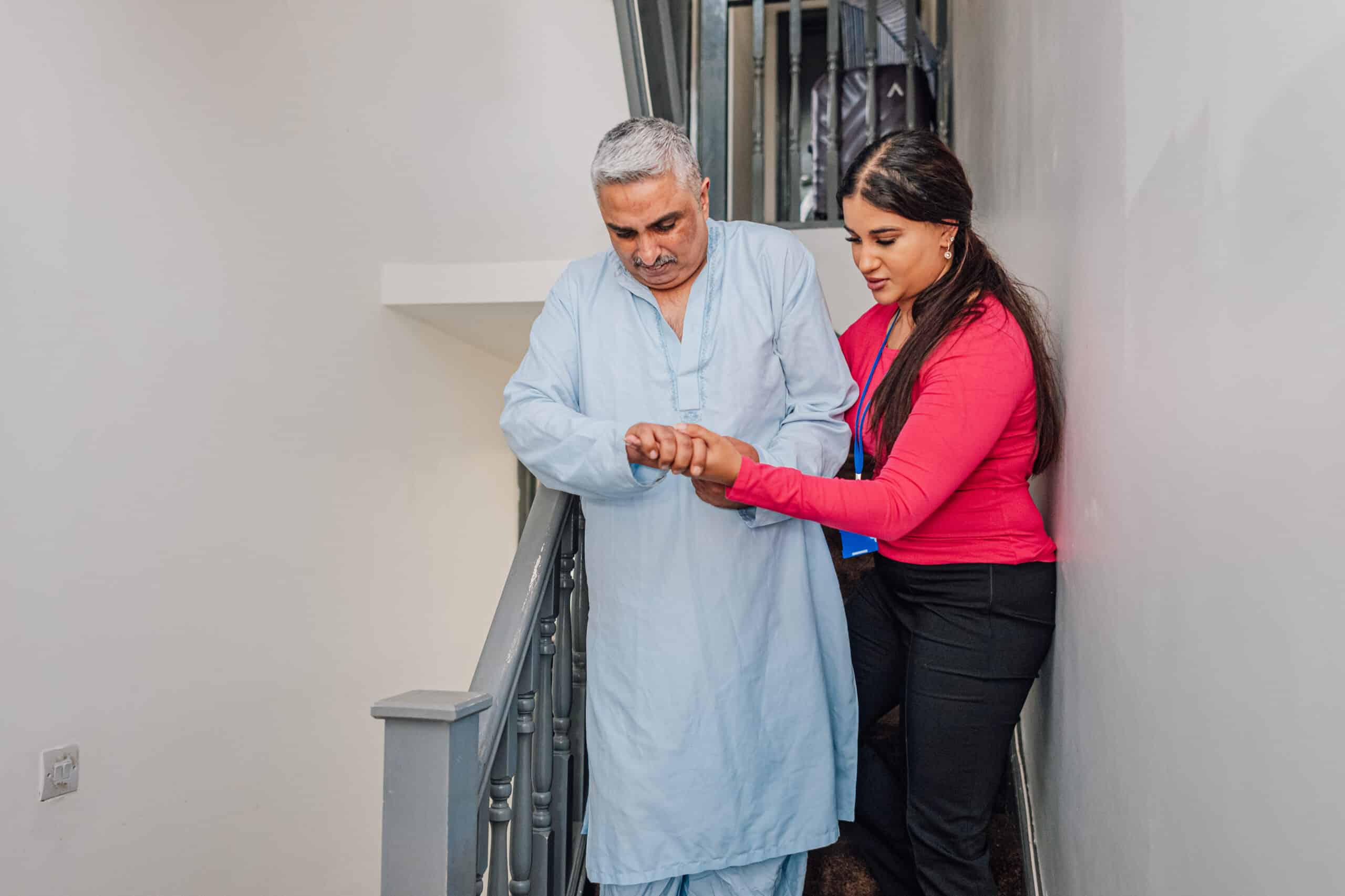
Your mum might happily spend an hour tending her tomatoes. The tricky part these days is bending down to fasten her gardening shoes. At Caremark, our care assistants can help with washing and dressing. If she likes to do most of that herself, we can lend a hand with just those awkward laces.
For a parent who misses going out with friends, companionship care could mean having someone to walk with to the local lunch club. To talk about what would make a difference to your parent’s day, contact your local Caremark team.
What To Read Next
- 7 Christmas Crafts for Older Adults: Fun and Easy Ideas
- Things Not to Say to Your Ageing Parents and Alternatives
- 5 Best Dogs for the Elderly: Enjoying Pet Ownership
- Autumn Activities for Elderly People To Enjoy
- Seasonal Affective Disorder in Older Adults Explained
- Celebrating Halloween with Elderly Loved Ones in Comfort
- Staying Connected During Rainy Days at Home
- Loneliness and Health in the UK: Finding Solutions
- The Benefits of Home Care for Older Adults
- Improve Mental Health in the Elderly for Better Well-Being
- Low-Maintenance Garden Ideas for the Elderly at Home
- The Best Fruits and Vegetables to Eat for Seniors