

Guide to Advanced Dementia
Advanced dementia can change how a person speaks, moves and responds. Yet the person you know is still there. A favourite song may ease tension. A familiar voice may bring calm. A gentle touch may say more than a long conversation. This guide explains the changes you may see. It also shows how good care can bring comfort, dignity and connection.

What Is Advanced Dementia?
Advanced dementia is another name for the later or severe stage of dementia. It is not a separate condition. It can occur in Alzheimer’s disease, vascular dementia and dementia with Lewy bodies. It can also occur in other forms of dementia.
At this stage, changes affect most parts of daily life. A person may need help throughout the day. This can include washing, dressing, eating, moving and using the toilet. They may speak less and find it hard to recognise people or places.
There is no exact line between one stage and the next. Some skills may remain while others change. Care should focus on the person. It should not be led by a label in their notes.
Common Signs of Advanced Dementia
Every experience is different, and not everyone will have every symptom. Changes often become more physical over time.
Memory and Recognition
A person may forget recent events and where they are. They may also forget the names of people close to them. This can be painful for families. Even then, a familiar voice, face or presence may still help them feel safe.
Speech and Communication
Speech may become limited to a few words, repeated phrases or sounds. Facial expressions, gestures and behaviour then become more important. They may show a need or feeling.
Movement and Personal Care
Walking, standing and changing position may become harder. The person may need help to prevent falls and pressure sores. Bladder or bowel incontinence can also develop. Calm, private support helps protect dignity during personal care.
Eating, Drinking and Physical Health
Appetite may fall, and chewing or swallowing can become hard. Signs include coughing during meals or holding food in the mouth. A wet-sounding voice or repeated chest infections can also point to a problem. Weight loss, greater frailty and more sleep are common too.
Staying Connected When Words Are Harder
When conversation fades, connection can take a new form. The aim is not to test what the person remembers. It is to help them feel safe, known and part of the moment.
Speak slowly and use one short idea at a time. Approach from the front and say who you are. Explain what you are going to do. Allow time for a response. Two clear choices, such as tea or juice, can still offer control.
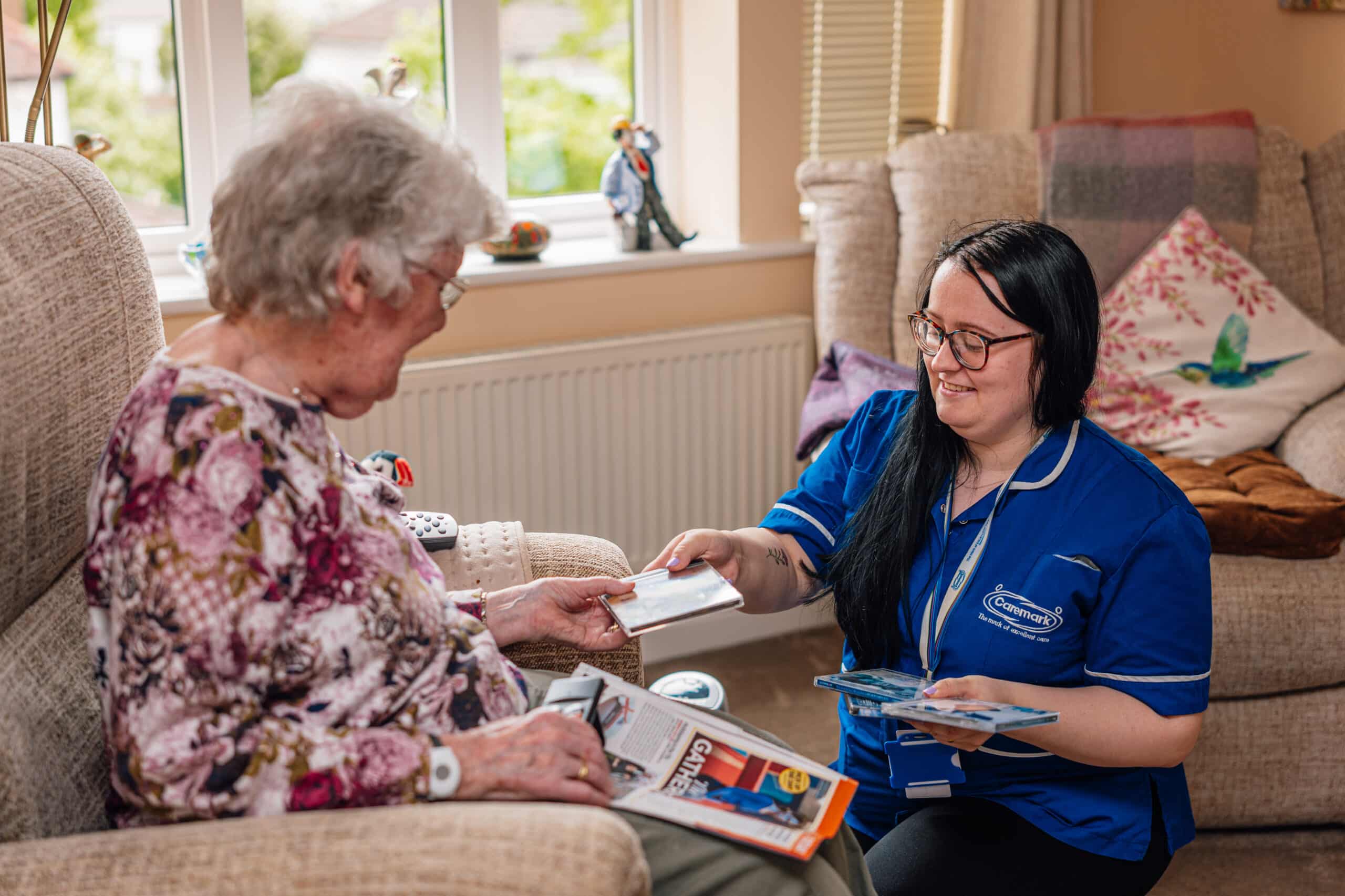
Familiar music, photographs, scents and treasured objects may bring comfort. A smile or softer breathing may show enjoyment. Turning away, grimacing or becoming tense may mean they need a pause.

Supporting Someone with Advanced Dementia
Good dementia care at home support begins with the person’s history, habits and likes. A steady daily rhythm can reduce worry. Keep the space calm. Where possible, offer care at times that suit them.
Behaviour may be a way to express a need. Look for a cause if the person becomes restless, calls out, pulls away or seems withdrawn. They may be in pain, afraid, thirsty, tired or unwell. Ask a GP or nurse for advice if you are concerned.
Meals should feel calm and unhurried. Make sure the person is sitting upright and alert enough to eat. If swallowing becomes hard, ask a GP or speech and language therapist for help. They can advise on safe food and drink. Do not change meal textures or thicken drinks without this advice.
Support gentle movement for as long as it is safe. A physio or occupational therapist can advise on exercise, equipment and falls. Check the person’s skin often. Help them change position to lower the risk of pressure sores.
When to Seek Medical Advice
Dementia usually changes over time. Do not assume a sudden change is part of it. New confusion or unusual sleepiness may be signs of delirium. Severe distress or a fast change in behaviour may have the same cause. Pain, constipation, lack of fluid, medicine or infection may be to blame. Seek prompt medical advice.
It also helps to plan before a crisis. The person should be part of choices for as long as possible. Families can talk with the GP and care team about future wishes. This includes comfort, treatment and who should help make choices.
Advanced dementia does not always mean someone is in the last days of life. There is no fixed timescale, so care should change as needs change.
How Caremark Can Help with Advanced Dementia
Familiar surroundings can bring comfort when the world feels less certain. Caremark provides person-centred dementia care at home. Each care plan fits the person, not a set routine.
Our trained care assistants take time to get to know each person. They learn about their life, needs, likes and usual routines. Support can include personal care, meals, drinks and safe movement. We can also help with continence care, medication support, companionship and reassurance. Our teams work with relatives and health staff as needs grow.
Care may begin with regular visits and grow as needs change. A local Caremark team can keep familiar routines in place. This can help the person feel safe and respected at home. We also give families practical support and time to rest.
If you are unsure what level of help is right, contact your local Caremark team. We will listen, answer your questions and help you plan the next step.
Our care assistants can help with personal care, overnight care, medication prompts, companionship and safe movement around the home. We can also provide reassurance during periods of confusion and adapt support as needs change. From a few visits each week to respite care or more regular help, we work to protect dignity, encourage independence and make daily life feel calmer.
What To Read Next
- Understanding the 7 Stages of Lewy Body Dementia
- Sundowning and Dementia – Causes and Support
- Learn About the 7 Stages of Frontotemporal Dementia
- Caring for Someone with Dementia at Home
- Discover the Benefits of Palliative Care for Patients with Dementia
- Joyful Minds: The Best Games for Dementia Patients
- What Are the Main Causes of Dementia?
- Alzheimer’s vs Dementia: What’s the Difference?
- 5 Winter Activities for People with Dementia
- 10 Ways Dementia May Present Near Life’s End
- Reducing Loneliness in Dementia Patients
- What is Dementia?
- How Is Dementia Diagnosed?
- Benefits of Arts and Crafts for Dementia