

Live-in Care or Care Home in Essex: Making the Right Decision
Choosing between live-in care or a care home for a loved one is an important decision, and many families look for top-rated home care in Essex when considering support options. When an older family member needs additional support, you may find yourself weighing the benefits of live-in care against moving into a residential care home. When making this choice, it’s important to understand the key differences between live-in care vs a care home. Both options can provide valuable assistance, but the right choice depends on individual preferences, health, lifestyle and support needs.
Live-in care is often the most practical option. It usually presents better value and is more flexible for a loved one to remain in their comfortable environment surrounded by familiar memories, helping to minimise the effects of dementia and loneliness.
If you are exploring live-in care or a care home in Essex, understanding the differences can help you make an informed decision that prioritises your loved one’s wellbeing, independence and quality of life.
What Is Live-in Care?
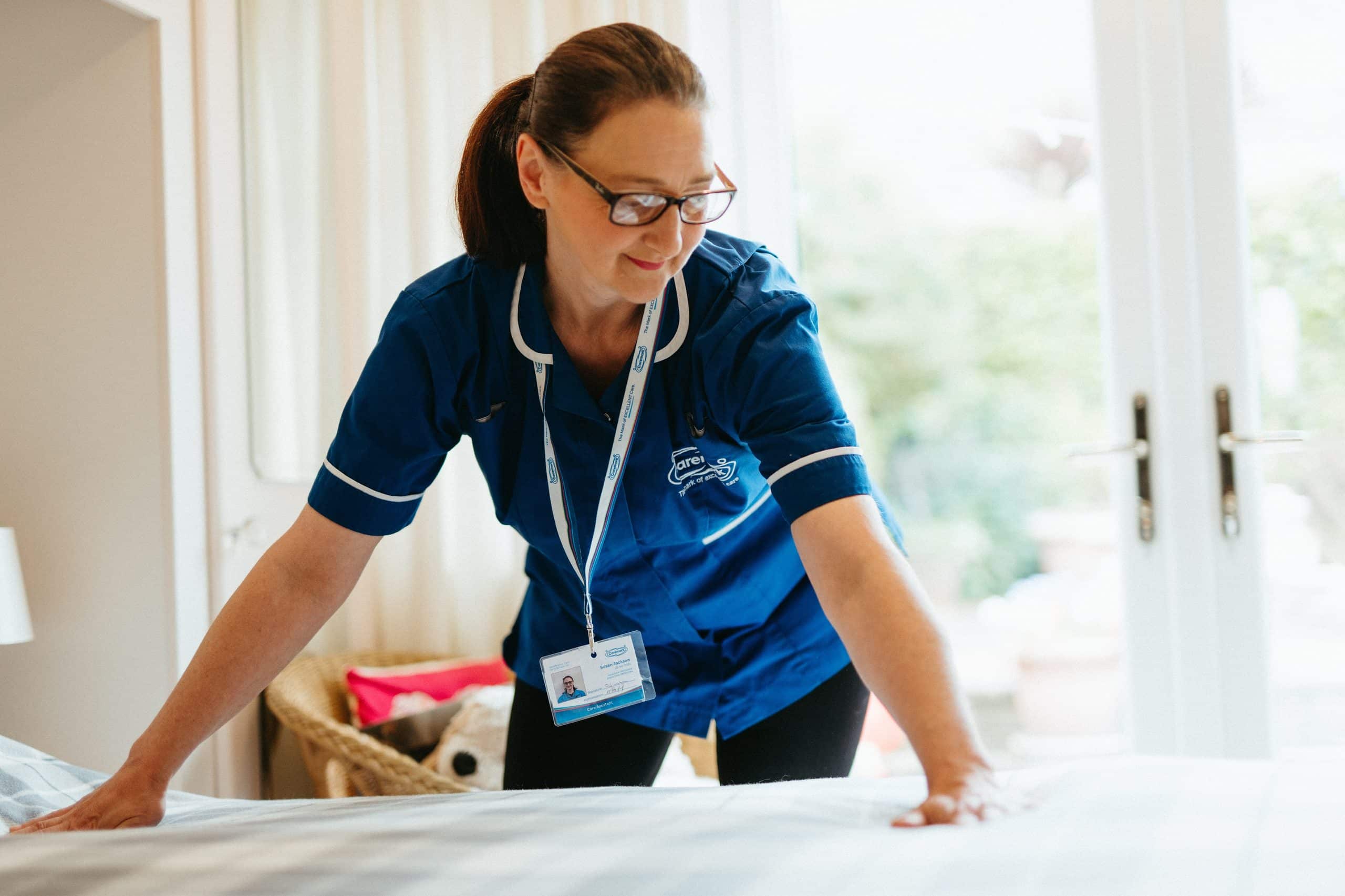
Live-in care allows an older person to remain in the comfort and familiarity of their own home while receiving personalised support from a dedicated, trained care assistant who lives with them.
At Caremark Thurrock, we understand how important it is for people to maintain their independence and familiar routines. Live-in care can be tailored to suit a person’s circumstances, whether they need help with everyday activities, companionship or more complex support.
Depending on the agreed care plan, a live-in care assistant may help with:
- Personal Care – Assistance with washing, dressing, and maintaining dignity.
- Dementia Care – Provide compassionate, personalised support designed to empower individuals with Dementia to maintain familiar routines.
- Meal Preparation – Help with cooking nutritious meals or support at mealtimes.
- Companionship – A Friendly face to provide conversation, reassurance, and emotional support.
- Overnight Care – Specialised support for individuals who may require assistance during the night.
- Medication Assistance – Helping with reminders and safe management of prescriptions.
- Shopping & Domestic Help – Assistance with groceries, cleaning, and household tasks.
- Respite Care – Temporary support to give family carers a well-deserved break.
- Mobility assistance – support with daily activities.
Live-in care offers a personalised approach, allowing people to receive support in familiar surroundings while remaining connected to their local community, friends and family.

How is Live-in Care Arranged?
Every Caremark Thurrock package is tailored. We start with a friendly, in-home assessment to understand health needs, preferences and routines. Working closely with you, we create a person-centred plan that sets out daily support, clinical tasks, favourite meals and how we share updates. We update these as care needs change. This way the care stays safe, respectful and effective, avoiding issues that can arise in some care homes. These can include care plans not being followed, changes going unnoticed or families feeling left in the dark.
Live-in care costs are clear and transparent and lets you see how it stacks up against the ongoing cost of receiving care in a care home.
What Is a Residential Care Home?
A residential care home provides accommodation, meals, personal care and support within a shared setting. Residents usually have their own bedrooms and access to communal areas where they can socialise and take part in activities.
Some care homes also provide nursing care for people with more complex medical requirements. However, residential care and nursing care are different, so it is important to establish which services a particular home offers.
Care homes can be beneficial for older people who enjoy communal living, organised activities and regular opportunities to interact with other residents. Staff are available to support residents throughout the day, although the level of individual attention will depend on the home’s staffing arrangements and the care required.
For families considering care home options in Essex, visiting different homes can help you assess the environment, facilities, activities and approach to personalised care.
Live-in Care vs a Care Home: What Are the Main Differences?
When comparing live-in care vs a care home, there are several important factors to consider.
1. Independence and Familiar Surroundings
One of the main advantages of live-in care is the opportunity to remain at home. Familiar surroundings, treasured possessions and established routines can provide reassurance, particularly for people living with dementia or those who find change unsettling.
With live-in care, your loved one can continue enjoying their garden, favourite chair, local community and everyday routines with appropriate support.
In contrast, moving into a care home involves adjusting to a new environment, shared facilities and the routines of the home. Although many residents settle in well and enjoy their new surroundings, the transition can take time.
2. Personalised One-to-One Support
Live-in care provides dedicated support from a care assistant who can focus on an individual’s preferences, routines and agreed care plan. This can be particularly valuable for people who need consistent assistance or prefer a more personal approach.
In a care home, staff support multiple residents. While care plans are developed for individual residents, the level of one-to-one attention may vary according to staffing levels and residents’ needs.
It is important to remember that live-in care does not mean continuous active supervision. Care assistants require appropriate breaks, rest periods and sleep, with alternative arrangements made where necessary.
3. Companionship and Social Interaction
Loneliness can affect older people, particularly when mobility difficulties or health conditions make it harder to get out and about.
Live in care provides regular companionship at home and can help people maintain relationships with friends, family and neighbours. Depending on their preferences and care arrangements, support may also include outings and community activities.
Care homes offer opportunities to socialise with other residents and participate in organised activities. For people who enjoy group events and communal living, this can be a significant benefit.
The best option depends on whether your loved one prefers familiar, individual companionship or a more sociable communal environment.
4. Cost of Care
Cost is another important consideration when comparing live-in care with a care home in Essex.
Live-in care costs depend on factors such as the level of support required, the complexity of the care plan, the number of care assistants needed and whether additional night-time support is necessary.
Care home fees vary according to location, facilities, room type and whether residential or nursing care is required.
Although live-in care may appear more expensive for one person, it can be worth comparing the total cost of both options. Where two people live together, live-in care may also offer an alternative to moving into separate accommodation.
Always request a personalised quotation and clarify what is included in the fees. Depending on individual circumstances, local authority assessments or other funding arrangements may also be relevant.
Which Option Is Best for Someone Living with Dementia?
For people living with dementia, familiarity and consistency can be particularly important. Remaining at home with live-in care may help preserve established routines, reduce disruption and provide reassurance.
However, dementia affects everyone differently. As support needs progress, some people may benefit from the specialist environment, structured activities and wider staff team available in a suitable care home.
The decision should consider safety, mobility, cognitive changes, overnight support requirements and the wellbeing of family members. A professional assessment can help identify the most appropriate arrangements.
Red Flags to Look Out For in a Care Home
If you are considering a care home, it helps to know the warning signs that something may not be right. Common red flags in a care home include:
- Insufficient staffing: Call bells going unanswered, residents left waiting for help, or staff appearing rushed and stressed.
- Poor cleanliness and hygiene: Unpleasant smells, dirty bathrooms, unwashed bedding or residents who do not look well-groomed.
- Lack of dignity and respect: Residents spoken to abruptly, ignored, or not involved in decisions about their daily routines.
- Limited choice and rigid routines: Fixed bedtimes, set meal options and activities with little flexibility for personal preferences.
- Few meaningful activities: Residents sitting for long periods with nothing to do, little stimulation or social interaction.
- Poor communication with families: Difficulty getting updates, staff unable to answer basic questions, or reluctance to share care plans.
- Unexplained injuries or frequent falls: Bruises, pressure sores or repeated falls without clear explanations or action plans.
- High staff turnover: Constantly changing faces, which can make it hard to build trust and continuity of care.
- Hidden or confusing fees: Extra charges for basic care, activities or “premium” services that were not clear at the outset.
Not every care home will show these red flags, but if you notice several together, it may mean the environment isn’t right for you or your loved one. Live-in care can help you avoid many of these concerns by keeping care personal, transparent, and centred on one individual in their own home, with live-in care costs, carer costs, and the overall cost of in-home care and domiciliary care clearly set out from the start.
Making the Right Decision With Caremark Thurrock
Before deciding between live-in care and a care home, consider the following questions:
- What level of personal care and daily assistance is required?
- Would your loved one prefer to remain at home?
- Can their home accommodate a live-in care arrangement safely?
- What companionship and social activities would they enjoy?
- Are specialist, nursing or overnight care arrangements necessary?
- What is the available budget, and could funding support be available?
- What arrangements would best support the family and their peace of mind?
Involving your loved one in the conversation is essential wherever possible. Their wishes, dignity and independence should remain central to the decision.
Explore Live-in Care in Essex with Caremark Thurrock
Deciding between live-in care and a care home does not have to be overwhelming. By considering the benefits, practicalities and costs of each option, you can choose an arrangement that reflects your loved one’s wishes and individual support needs.
At Caremark Thurrock, we provide personalised home care designed to help people maintain their independence, dignity and quality of life in familiar surroundings. Our team can discuss the support available and help you understand whether live-in care may be suitable for your family.
If you are considering live-in care vs a care home in Essex, contact Caremark Thurrock to discuss your circumstances and explore the options available. Contact Caremark Thurrock today on 01375 213255 to find out more about personalised home care and how we can support your loved one.