

Live-in care vs residential care: choose the right support with Caremark Preston
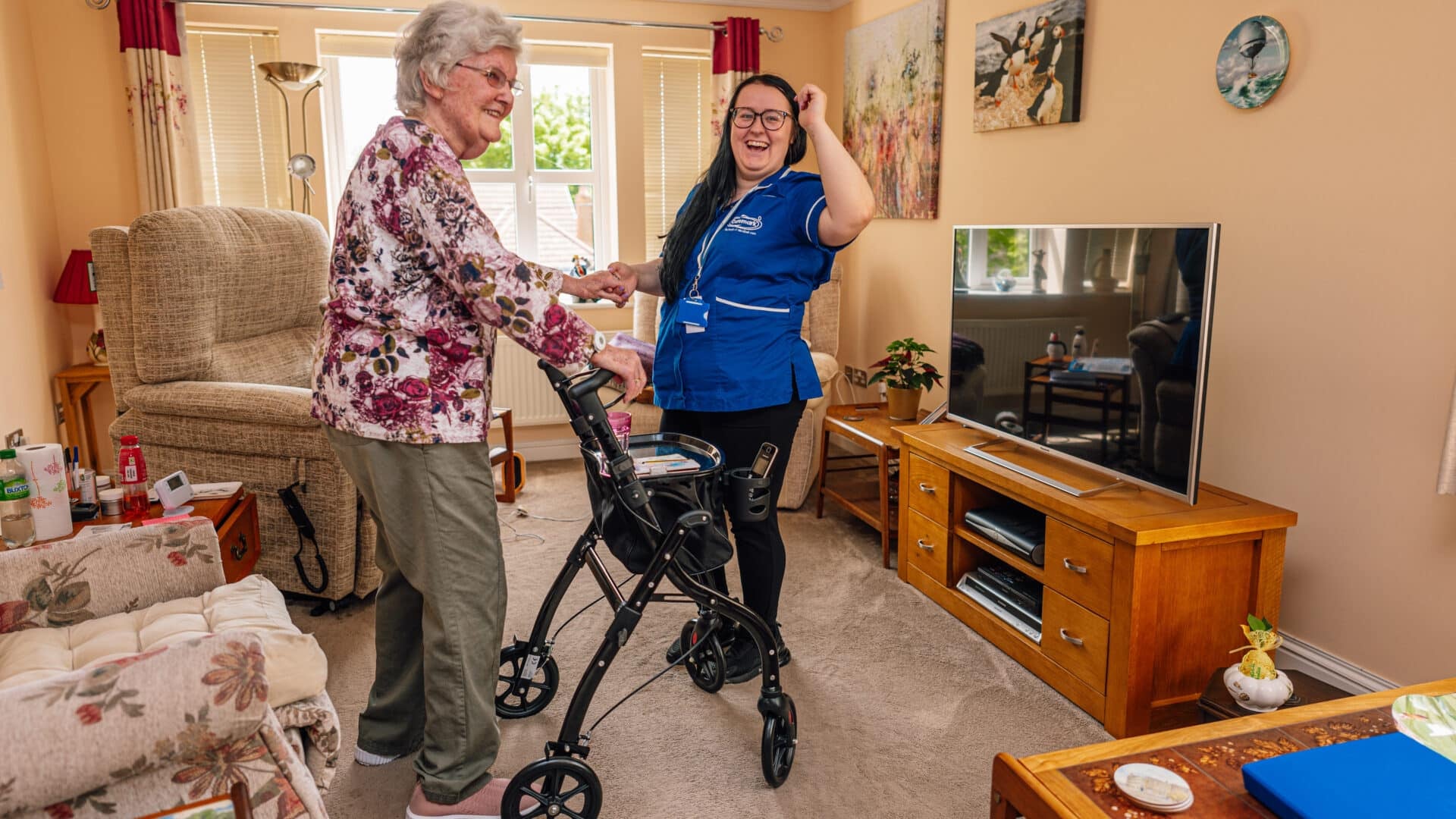
There’s no place like home. When you’re weighing up live-in care vs residential care, it helps to see clearly what each option offers day to day. Both can keep you safe and supported. They simply suit different lifestyles, preferences and health needs. This guide explains the differences, what life looks like in each setting, and how Caremark’s live in care helps you or someone you love stay independent at home with professional, compassionate support.
What is residential care and what is live in care?
Residential care means moving into a care home or nursing home with staff on site around the clock. You’ll have your own bedroom and share communal spaces, activities and mealtimes. This can be a good fit if you need frequent help at unpredictable times, prefer a structured timetable, or would benefit from on-site facilities and group living.
Live in care brings a dedicated Caremark Care Assistant to live with you in your home, delivering round-the-clock support. You keep your familiar surroundings, routines and community ties. Your Care Assistant helps with personal care, medication, mobility, cooking, housekeeping and companionship. If you love your garden, want to keep a pet, or like choosing your own mealtimes and outings, live in care keeps life feeling like yours.
Suitability depends on independence, safety and social needs. Residential care can suit people who enjoy group activities or whose home cannot be adapted safely. Live in care is ideal if you want to maintain daily habits, stay close to neighbours and local services, and still receive continuous support. It’s especially helpful for couples who want to remain together at home. If you’re comparing home care vs care home for the first time, we’ll explain it all in plain English so you feel confident in your choice.
With Caremark live in care, you’re matched with a carefully selected Care Assistant for one-to-one support. We agree a clear rota, household arrangements and a tailored care plan so support feels seamless and respectful of your lifestyle. Relief cover is arranged for breaks, so there’s continuity and peace of mind.
Personalisation, independence and lifestyle
Home is full of memories, comforts and routines. Live in care lets you keep them. You choose when to wake and sleep, what you eat and when, and which hobbies to enjoy. Want to keep your cat, attend your place of worship, volunteer or meet friends at your local club? Your Care Assistant makes it possible. For people living with dementia, remaining in a familiar environment can reduce confusion and anxiety, supporting a calmer daily rhythm.
In a residential setting, care is professional and caring, but timetables and activities are shared. While many homes offer choice, there are natural limits because support is delivered across a group. By contrast, one-to-one live in care adapts entirely to you—from how you like your tea to the radio station you prefer—so everyday life feels natural and dignified.
Caremark’s approach is person-centred from day one. We carry out a detailed assessment to understand your preferences, history, interests and goals. Your individual care plan captures daily routines, communication styles, risks and outcomes. A small, consistent team builds trust and familiarity. Regular reviews keep everything aligned as needs change, so you keep the right balance of independence and support.

Quality, safety and clinical support
Both live in care and residential care can manage medication, reduce risks and provide night-time reassurance. In a care home, medication rounds and falls prevention are coordinated across the home. With live in care, your Care Assistant provides timely prompts or administration in line with your plan, keeps accurate records and watches for side effects in the context of your daily life. Night-time support can be set up as sleeping or waking nights depending on your needs, giving families reassurance.
Caremark works closely with local GPs, district nurses, occupational therapists and physiotherapists. If you live with complex needs such as diabetes, Parkinson’s, stroke aftercare, stoma or catheter care, we liaise with community clinicians to implement therapy plans, manage equipment and monitor changes. Where helpful, we can arrange technology-enabled solutions such as falls sensors and digital care records to strengthen safety and communication. Training and quality assurance matter. Caremark Care Assistants complete thorough induction and ongoing training in moving and handling, medication management, safeguarding, infection prevention and dementia care. Supervisors carry out regular spot checks, supervisions and competency assessments. Our branches follow robust policies and are monitored against regulatory standards. We welcome feedback from customers and families and use it to drive continuous improvement—because trust is built on openness and high standards
Cost comparison and funding options
Costs vary with location, level of need and type of service. Residential care fees usually include accommodation, meals, utilities, communal activities and personal care. There may be extra charges for hairdressing, chiropody or private outings. Nursing homes, which provide more clinical support on site, generally cost more than standard residential homes.
Live in care pricing typically covers a dedicated Care Assistant living in your home, personalised one-to-one support, household help and companionship. You’ll usually provide a suitable private room and food for the Care Assistant. For an individual, live in care can be comparable to residential care. For couples, it’s often highly cost-effective because one live in service can support two people living together.
Several factors influence costs, including the complexity of care (for example PEG feeding, advanced dementia or palliative care), geographical area, whether night-time support is required, and any specialist training. Travel for appointments and social activities may also be considered. When comparing home care vs care home budgets, we’ll break everything down clearly so there are no surprises.
Funding options include local authority support following a care needs assessment and financial assessment, NHS Continuing Healthcare for those with a primary health need, and NHS-funded Nursing Care where applicable. Many families self-fund using savings, pensions, investments or equity release, and may claim Attendance Allowance or Personal Independence Payment where eligible. Caremark provides clear guidance, signposts to independent financial advice and explains fees upfront, so you can plan with confidence.
At a glance: live-in care vs residential care
| Consideration | Live in care | Residential care |
| Where care is delivered | In your own home with a dedicated Care Assistant | In a care home or nursing home with staff on site |
| Personalisation | High: one-to-one support tailored to your routines | Moderate: shared routines and activities |
| Companionship | Consistent companion who knows your preferences | Community atmosphere with group interaction |
| Family and community links | Stay close to neighbours, clubs and local services | Visits encouraged; community access varies by home |
| Adaptability | Flexible schedules; support can scale quickly | Structured routines; changes managed by the home |
| Costs | Comparable for individuals; often cost-effective for couples | Set weekly fees; higher for nursing care |
| Clinical oversight | Community clinicians visit; Caremark coordinates | On-site team; nursing homes provide clinical care |
| Home environment | Stay in familiar surroundings | Move to a new setting with communal living |
When live in care is the best option
For many people, staying at home leads to better outcomes, especially when familiarity and routine matter. Somebody living with dementia, a known environment can maintain orientation and support meaningful activities such as sorting photographs or tending plants. For those who are frail or recovering from illness, live in care can prevent deconditioning by encouraging gentle movement, hydration and nutritious meals in a comfortable setting.
One-to-one support brings companionship and mental wellbeing. A consistent Care Assistant can spark conversation, hobbies and trips outdoors, helping to ease loneliness, build confidence and reduce anxiety. Early, attentive observation often spots subtle changes, helping to prevent falls, infections and medication errors. This proactive approach can reduce avoidable hospital admissions and support quicker recovery after setbacks.
Caremark provides specialist live in care for a range of conditions, including dementia, Parkinson’s, multiple sclerosis, motor neurone disease, stroke recovery and palliative or end-of-life care. Techniques are tailored to each condition—cueing strategies for Parkinson’s freezing, support for safe swallowing after a stroke, or adaptations for people with sensory changes. Our aim is simple: maximise independence, comfort and quality of life.
Signs live in care may suit you
- You value your home, garden or pets and want them to remain part of daily life.
- You want control over routines such as mealtimes, bathing and sleep.
- You would benefit from consistent one-to-one support and companionship.
- Your home can be adapted for safety, or has already been adapted.
- You and your partner wish to remain together at home with shared support.
How Caremark helps you decide
Choosing between live-in care vs residential care can feel daunting. We keep it simple and human. We begin with a free home care assessment to understand your needs, preferences and goals. Together we create a tailored care plan with transparent pricing, so you know exactly what’s included. No jargon. No surprises. Just clear information to support an informed decision about home care vs care home.
If you’re unsure whether live in care is right for you, we can arrange a trial. Support can be scaled up or down, and combined with hourly visits or respite to suit changing circumstances. Flexibility is built in—whether needs increase after a hospital stay or reduce as recovery progresses.
Families stay fully informed. We agree how you’d like to receive updates, use digital care records where helpful, and report any concerns promptly. Supervisors monitor quality through regular visits and reviews, and we adjust plans quickly as needs evolve. Whether you’re exploring live-in care vs residential care for the first time or reviewing options after a change in health, Caremark will guide you with empathy, expertise and practical solutions.
What to consider when choosing
- Daily life: which option best preserves your routines and hobbies?
- Health and safety: current risks, likely progression and night-time needs.
- Environment: suitability of your home for adaptations versus on-site facilities.
- Social needs: preference for one-to-one companionship or group activities.
- Cost and funding: affordability, eligibility for public funding and benefits.
- Continuity: value of a consistent Care Assistant versus a wider team in a home.
- Location: proximity to family, friends and your wider community.
Frequently asked questions
What does a live in Care Assistant do each day?
They provide personal care, help with washing and dressing, support with mobility, medication prompts or administration, meal planning and cooking, light housekeeping, laundry and companionship. They can accompany you to appointments, social events or walks, and help you keep up with hobbies and interests. This is care domiciliary delivered with warmth and dignity.
How is privacy maintained with live in care?
Your Care Assistant has their own room and respects agreed boundaries. The care plan sets out preferred times for support, how you like tasks to be done, and how to handle quiet time or visitors. This keeps your independence at the centre, with discreet, professional help when you want it.
What happens if my Care Assistant takes time off?
Caremark arranges relief cover so support continues without interruption. We aim to provide a small, consistent team and, wherever possible, introduce cover staff in advance. Continuity and trust matter, and we protect both.
Can live in care manage complex conditions?
Yes. We coordinate with community clinicians to deliver safe, consistent care for complex needs. Our teams receive additional training where required, and we follow clear protocols to maintain safety and comfort. As leaders in domiciliary care, we bring expertise to your doorstep.
How quickly can live in care start?
We can often begin within days, depending on your needs and matching the right Care Assistant. We complete an assessment, care planning and introductions before care starts, so everything begins smoothly.
Why choose Caremark for live in care and domiciliary care?
- Personalised care: We design your care around you, not the other way round.
- Excellent standards: Rigorous training, supervision and quality checks, with openness and honesty at every step.
- Allocated Care Assistant: We take time to match personalities and maintain that pairing for consistency.
- Family contact: We keep families informed and share updates in the way that works best for you.
- Local and trusted: Your Caremark Location Name team is part of your community. We’re nearby, responsive and accountable.
- Breadth of expertise: From companionship to complex needs and end-of-life care, our care domiciliary services adapt as life changes.
Caremark supports thousands of customers across the UK with kindness, professionalism and a cheery smile. We believe in doing the simple things well—turning up on time, listening carefully, and treating every person with dignity and respect.
Next steps with Caremark
Every situation is unique. If you’re comparing live-in care vs residential care or weighing up home care vs care home, we’ll take time to understand what matters most to you and provide clear, practical guidance. From your first enquiry, you’ll receive straightforward information about options, funding routes and what to expect day to day.
- Book a free home care assessment at a convenient time.
- Receive a tailored care plan and transparent pricing.
- Arrange a trial of live in care or combine with hourly domiciliary care if you prefer.
- Benefit from regular reviews, digital care records and open communication.
Nothing compares to home, and nothing compares to Caremark. Choose a caring, reliable service designed around your life—support that protects safety, preserves independence and brings reassurance to you and your family.
About Caremark Preston
Caremark Preston is top quality, award winning service provider comparable to no other. Our domiciliary care in Preston will enable you to remain in the comfort and familiarity of your own home. You will receive regular health and social care visits and services to suit your personal needs. You can choose from 30 minutes of care to 24-hour domiciliary care.
At Caremark Preston, we offer a wide range of care services in Preston, including dementia care, live-in care, overnight care, palliative care, and respite care.