

Joyful Minds: The Best Games for Dementia Patients
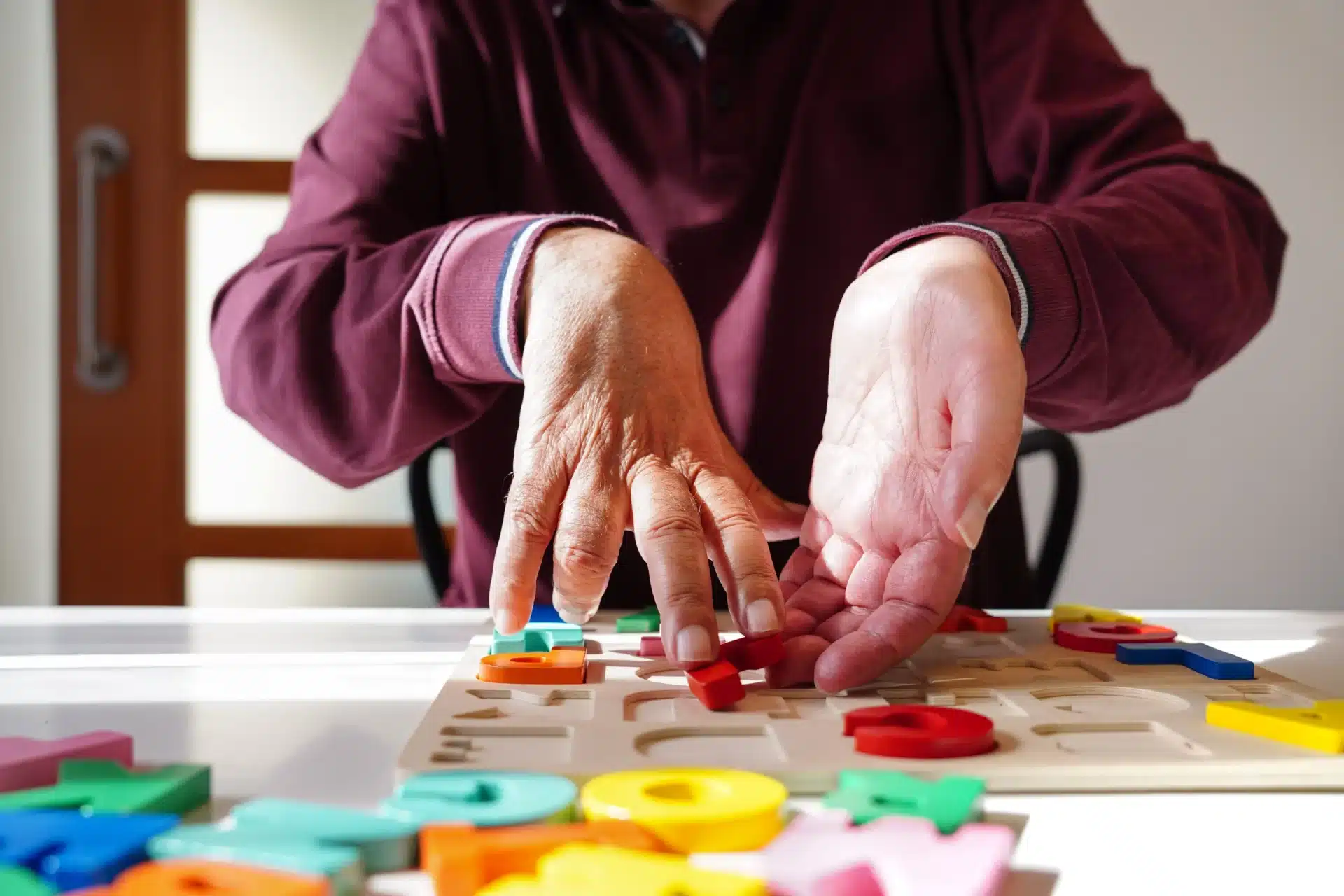
A good game can do something special. It can bring a smile, spark a memory, or turn a quiet afternoon into a shared moment. If you are searching for games for dementia patients, you may be hoping for more than entertainment. You may be looking for calm, connection, and a way to help someone feel like themselves.
The Best Games for Dementia Patients
The good news is that play can still be part of life with dementia. The “best” game is not the hardest one. It is the one that feels safe, familiar, and enjoyable. In this guide, we share game ideas for dementia patients you can try at home, plus simple tips to make game time feel relaxed and positive.
Why Games Can Help When Memory Changes
Dementia can affect memory, focus, language, and confidence. That can make everyday tasks feel harder. Games can be a gentle way to support the brain without pressure.
Gentle benefits for the mind and mood
Games can help someone practise skills like attention, turn taking, and hand movement. They may also support mood. A small win, a shared laugh, or a familiar song can lift the day.
Just as important, games can create a sense of routine. Many people feel calmer when they know what is coming next. A regular “game time” after lunch, for example, can become a steady and comforting part of the day.
Connection matters more than “getting it right”
With dementia, the goal is not to test memory. It is to enjoy the moment. Some days, a person may forget the rules or lose their place. That is normal. What matters is how the game feels.
Think of games as a way to be together. Even a simple match game can become a conversation, a story, or a shared memory.
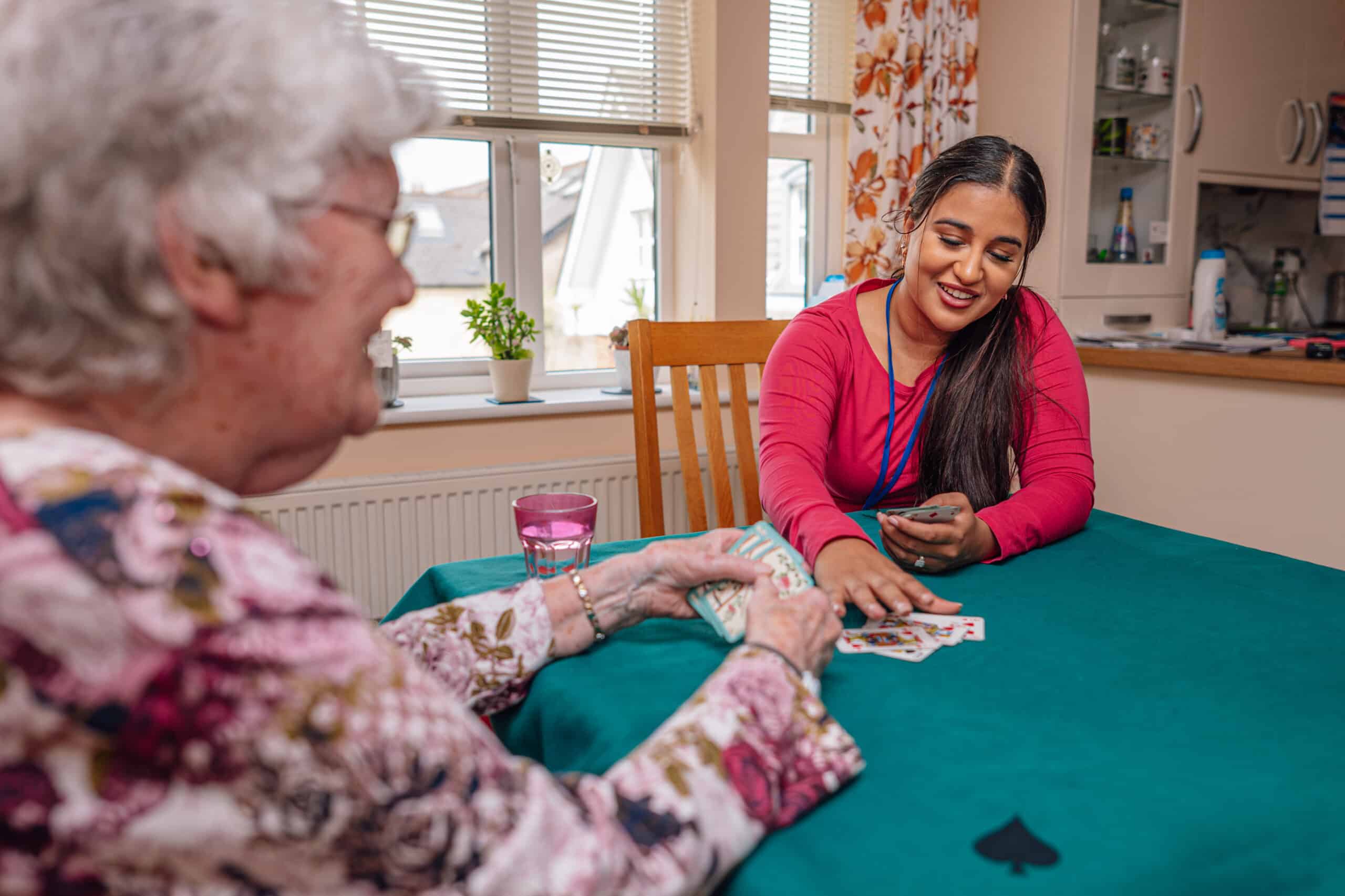
How To Choose The Right Game for Dementia Patients
The right choice depends on the person, the stage of dementia, and how they feel that day. Our dementia care at home helps determine the stage and tailors care to their needs. Therefore, when considering games for dementia patients, there are a few things to take into account:
Start with the person, not the game
Begin with what they have always enjoyed. Did they love cards, crosswords, music, or puzzles? Familiar interests often work best. If they were never a “board game” person, a board game may not be the best place to start.
Also consider energy and time of day. Some people feel sharper in the morning. Others do better after a rest.
Keep rules simple and familiar
Choose games with clear steps and a quick start. Too many choices can feel overwhelming. If a game has complex rules, simplify them. You can also play as a team, so there is less pressure.
A helpful rule is this: if you need to explain it more than once, it may be too hard for today.
Match the game to the stage of dementia
Dementia can change from one month to the next. It can also change from one day to the next. A game that felt easy before may suddenly feel confusing. That is not anyone’s fault. A helpful approach is to match the game to the stage of dementia and to how the person feels today. Keep the goal simple: comfort, connection, and a little joy.
- In the early stage, many people can still enjoy familiar rules and light challenges.
- In the middle stage, people often do best with simpler turns, visual support, and team play.
- In the later stage, the best “games” may feel more like gentle play. Sensory and music based activities can be especially comforting.
If a game is not working, it is okay to switch. You are not giving up. You are adapting with kindness.
Set up for success
Small changes can make a big difference:
- Use good lighting and reduce background noise.
- Choose larger pieces that are easy to hold.
- Keep the table clear, with only what you need.
- Sit face to face so it is easier to follow cues.
The Best Game Ideas For Dementia Patients to Try at Home
Below are game ideas that often work well for patients living with dementia. You can adapt each one to match ability and mood.
Classic board games, made easier
Board games can be great if they are familiar. Try:
- Dominoes: match numbers, or match colours if you have a colour set.
- Snakes and Ladders: simple turns, clear movement, and a fun surprise.
- Ludo: play with fewer counters if needed.
- Picture bingo: use photos of animals, food, or places.
Tip: you can remove “penalties” that cause frustration. For example, if landing on a space makes someone go backwards, you can skip that rule.
Card and matching games
Cards are flexible, quick, and easy to scale:
- Snap with picture cards
- Pairs, also called matching cards
- Sorting by suit or colour
- “Highest card wins” with just a few cards each
If matching is hard, start by sorting. Sorting can feel soothing and purposeful.
Word and number games
Some people enjoy words even when short term memory is changing:
- Simple word searches with large print
- Finish the phrase: “A stitch in time…” and you complete it together
- Name three: “Name three fruits” or “name three seaside towns”
- Counting games with coins or buttons, such as counting into small piles
If words feel difficult that day, switch to picture based games. It is not a step back. It is a kind choice.
Music and rhythm games
Music often reaches people in a deep way. Try:
- Guess the song from the first few seconds
- Sing along playlists from their teens and twenties
- Tap the rhythm and copy the pattern
- Pass the beat, where you clap a simple rhythm and take turns
Music can also help with movement. A gentle chair dance can become a joyful game all on its own.
Sensory games and hands on play
Hands on play can be calming and satisfying:
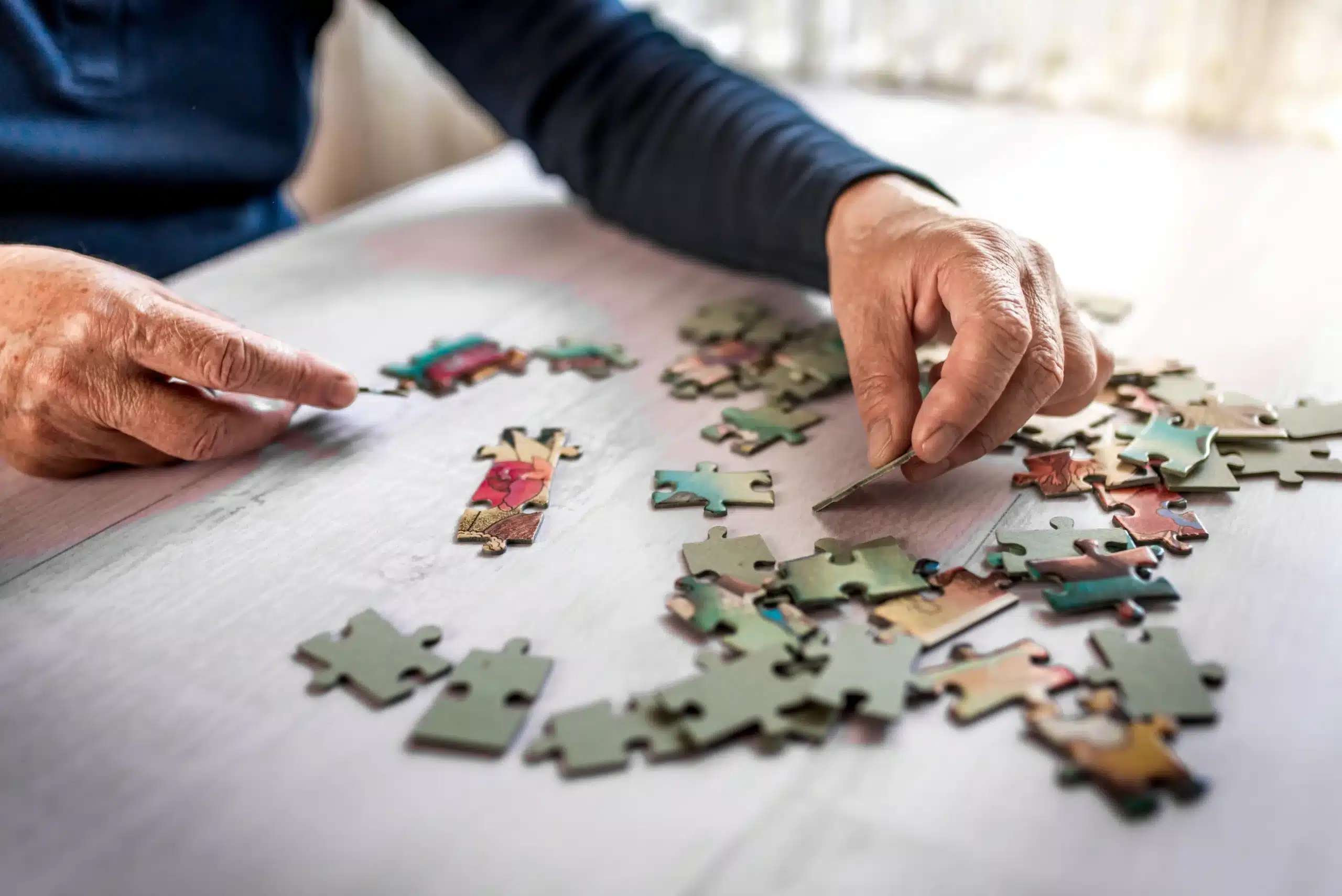
- Jigsaw puzzles with larger pieces and clear images
- “Feel and guess” bags with safe objects, like a scarf, a pine cone, or a soft brush
- Sorting games with buttons, postcards, or fabric squares
- Simple craft kits, like sticker art or colouring
These activities are great when someone finds conversation tiring but still wants company.
Tablet and screen based games
Some people enjoy a tablet, especially if vision is supported with larger text:
- Simple matching apps
- Digital jigsaws
- Drawing apps
- Photo slideshows where you name people or places together
Keep sessions short, and avoid fast moving games that can cause stress.
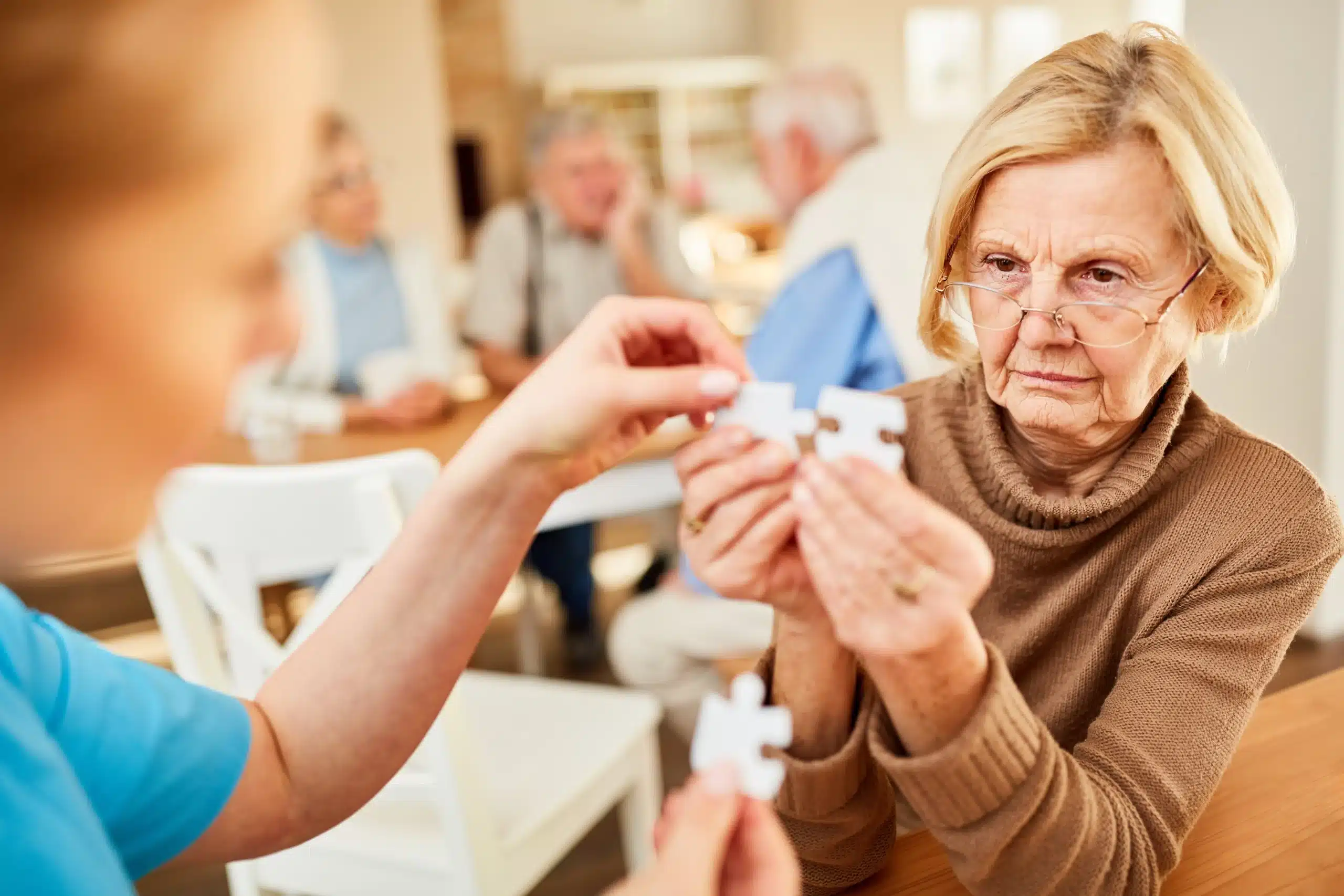
Tips to Make Game Time Calm and Enjoyable
A few small habits can protect confidence and keep the mood light:
- Start with a warm invitation, not a demand.
- Use simple language and short sentences.
- Offer one choice at a time.
- Praise the effort, not just the result.
- Let them lead when they can, even in small ways.
- Take breaks before frustration builds.
- Stop while it is still going well, so it ends on a positive note.
If the person makes a mistake, try not to correct them. You can gently guide or simply move on. Kindness protects dignity.
When to Pause and When to Ask for Advice
Some days, a person may feel tired, low, or confused. If a game leads to stress, it is okay to stop. Look for signs like agitation, withdrawal, or repeated worry. If you notice a sudden change in thinking, mood, sleep, or behaviour, it may help to speak to a GP. Sometimes changes can be linked to infections, pain, or medication issues.

How Caremark Can Help People Living with Dementia
At Caremark, we know that meaningful moments matter. Games and activities are not “extras”. They are part of feeling safe, valued, and connected at home. Our trained care assistants can support with gentle, person-centred activities that match the day. That might include:
- Setting up simple games for dementia patients and joining in with encouragement
- Creating a calm routine so the day feels more familiar
- Supporting memory friendly conversation and reminiscence
- Helping someone stay active and engaged in their local community
- Offering reassurance, companionship, and continuity
If you are supporting a loved one, you do not have to carry everything alone. With the right support, home can still feel like home.
What To Read Next
- What Are the Main Causes of Dementia?
- Alzheimer’s vs Dementia: What’s the Difference?
- 5 Winter Activities for People with Dementia
- 10 Ways Dementia May Present Near Life’s End
- Reducing Loneliness in Dementia Patients
- What is Dementia?
- How Is Dementia Diagnosed?
- Benefits of Arts and Crafts for Dementia