

How neurodiversity can be a strength in care
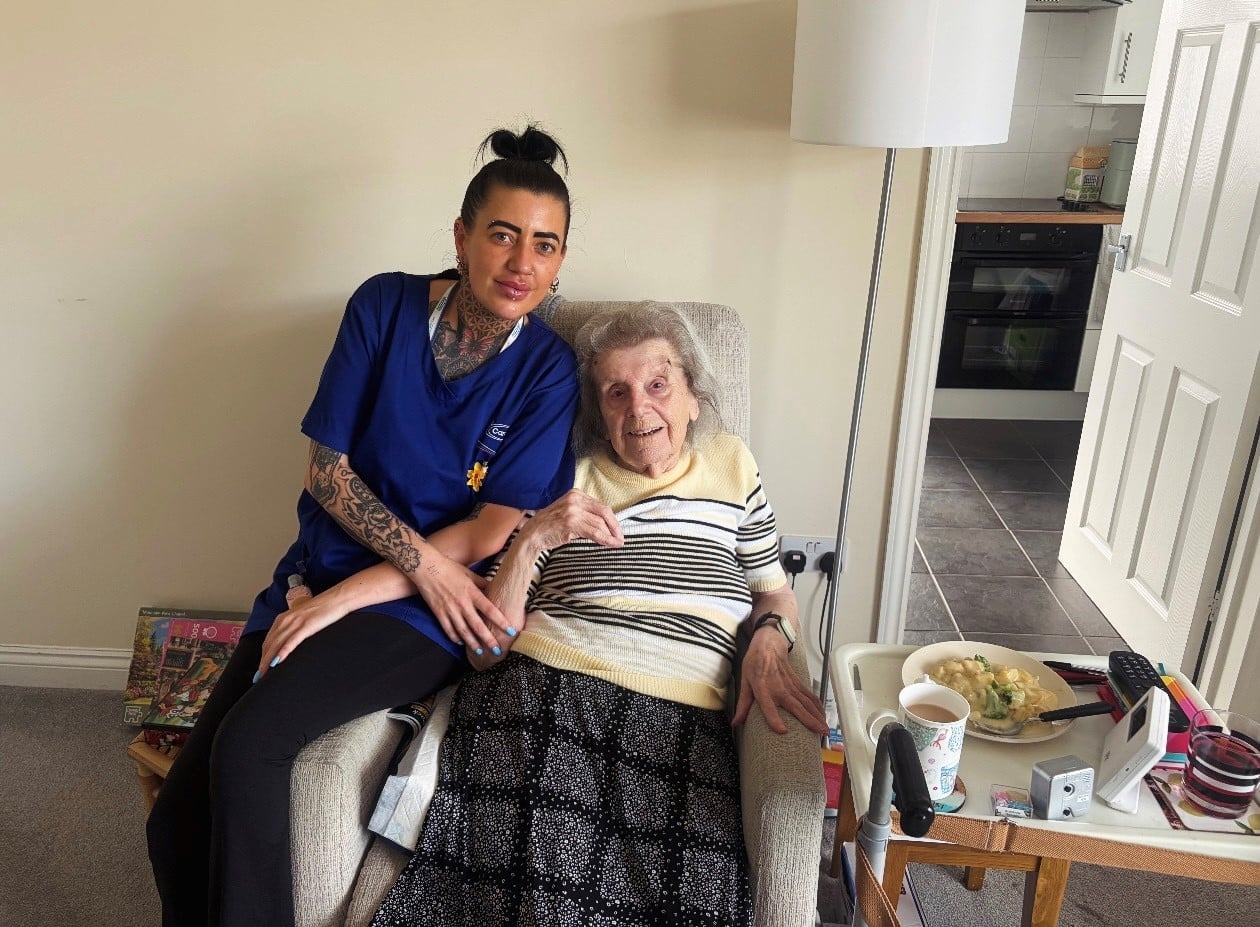
Caremark Redcar & Cleveland Care Assistant Chelsea Gibson is sharing her story to help challenge perceptions around ADHD and show how neurodiversity can be a strength in care.
For Chelsea Gibson, caring for others has never been just a job. It’s a vocation that has shaped nearly every stage of her adult life.
Now 34, Chelsea has worked in care for almost 16 years, spending the majority of her career in home care and supporting vulnerable people in her local community.
“I started care when I was 18,” she explains. “I’d done placements while I was still at school and I just knew it was something I wanted to do. I spent a lot of time with my grandparents growing up and I helped look after my nana. Looking after people just felt natural to me.”
While Chelsea briefly worked in a care home and even started nurse training, she quickly realised that home care was where her heart truly belonged.
“I love the relationship side of care,” she says. “I like getting to know people, listening to their stories and spending time with them. Older people have so much life experience and so much to share. Looking after them makes me happy.”
A diagnosis that brought answers
Although Chelsea has lived with ADHD her entire life, she wasn’t formally diagnosed until she was 32.
Like many women, her symptoms were initially misunderstood.
“For years I was told I had anxiety and depression,” she explains. “Girls often present differently to boys when it comes to ADHD. A lot of us become very good at masking, so it doesn’t always get recognised.”
Looking back, Chelsea can now see the signs that were present throughout childhood.
“I struggled at school and left with no qualifications. My school reports talked about not paying attention, being fidgety and hyperactive, but back then ADHD in girls just wasn’t something people looked for.”
It was only after learning more about neurodiversity through her daughter, who is autistic, that Chelsea started recognising similar traits in herself.
After researching ADHD and pursuing an assessment through the Right to Choose pathway, she received a diagnosis of severe combined ADHD.
“The specialists actually said they didn’t know how I’d managed to get as far as I had without a diagnosis,” she says. “For so long I thought I was just the problem, or that I wasn’t trying hard enough.”
Since receiving her diagnosis and starting medication, Chelsea says the difference has been life changing.
“The best way I can describe it is that before medication it felt like there were ten televisions on in my head all at the same time,” she says.
“My brain was never quiet. Now I can focus. I’m less overwhelmed and less frustrated because my mind isn’t racing at a million miles an hour.”
The diagnosis also brought a new sense of understanding.
“I was angry at first because I felt misunderstood for so many years,” she admits. “But now I understand myself so much better.”
Why home care works so well
Chelsea believes that many of the qualities associated with ADHD actually help her succeed in her role.
“Home care suits me perfectly because every day is different,” she says. “You’re meeting different people, visiting different homes and helping with different situations. It’s not repetitive.”
Having the opportunity to move between visits throughout the day also helps her manage her energy and focus.
“I struggled when I worked in a care home because I was in the same environment for twelve hours. With home care there’s variety and flexibility, which really works for me.”
Caremark’s digital systems also give her added confidence.
“I love the Caremark app,” she explains. “You tick tasks off as you go along, so everything is there in front of you. As someone who worries about forgetting things, that really helps.”
One of Chelsea’s greatest strengths is the empathy she brings to every visit.
“I pick up when people aren’t themselves and I genuinely care about how they’re feeling,” she says.
Combined with her naturally bubbly personality and love of conversation, it helps her build strong relationships with customers.
“I love talking to people and listening to their stories,” she says. “That’s one of my favourite parts of the job.”
The impact she has on those she supports is something she values deeply.
Chelsea adds: “I recently went back to support a customer I’d helped before and he was so pleased to see me. He told me how happy he was that I was back. That meant a lot.”
Neurodiversity is no barrier to working in care
Like many people with ADHD, Chelsea sometimes finds herself battling self-doubt.
“I can be very hard on myself,” she says. “Sometimes I still question whether I’m doing things well enough.”
But the feedback she receives from customers tells a different story.
“When customers tell me they enjoy seeing me, or that they like how bubbly and chatty I am, it makes me realise that those things are strengths.”
Chelsea hopes that by sharing her experiences, she can help others understand that neurodiversity should never be seen as a barrier to a successful career in care.
“Having ADHD doesn’t define who I am,” she says. “Yes, it can be challenging at times, but it also gives me strengths. I genuinely believe it helps me connect with people and makes me really good at my job.”
And that’s exactly why Chelsea continues to make such a difference every day to the customers she supports across Redcar and Cleveland.
“Just because I have ADHD doesn’t mean I’m not good at my job. If anything, it helps me be even better at it,” she says.
About Caremark Redcar and Cleveland
If you are neurodivergent and think, like Chelsea, that working in care would suit you, then we would love to hear from you. Please call us 0n 01287 634706