

6 Questions to Ask Before Choosing a Live-In Care Provider in Worthing & Adur

You might enjoy having someone to cook with and prefer a quiet evening to yourself. When you put together questions for a live-in care provider in Worthing, ask how they’d fit support around the way you like to spend your day.
These six questions can help you compare local providers. They cover carer training, who steps in when your carer is away, and what’s included in the price.
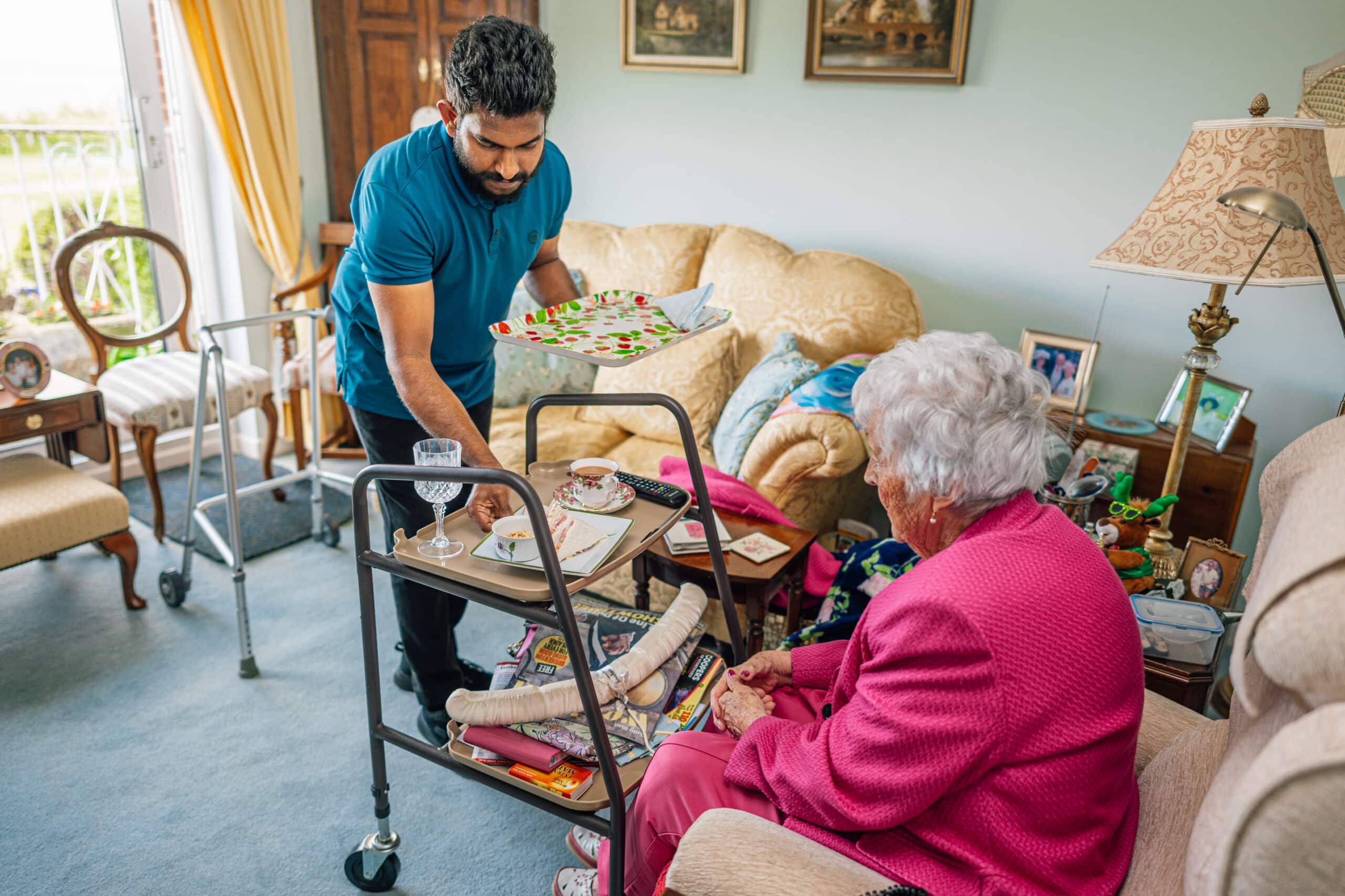
What Questions Should You Ask a Live-In Care Provider?
Ask 6 questions before choosing a provider: check regulation, verify carer standards, examine continuity, review care planning, understand pricing and evaluate customer feedback.
Each question measures a different part of care quality.
1. Is the Provider Regulated and Properly Registered?
Check the provider’s regulatory status first.
In England, the Care Quality Commission (CQC) regulates health and social care services. The CQC assesses registered services across areas including safety, effectiveness, responsiveness, care and leadership.
A regulated provider operates within defined standards and remains subject to inspection.
Ask the provider to explain:
- Confirm its CQC registration.
- Provide its current CQC rating.
- Explain its quality monitoring process.
- Describe its safeguarding procedures.
- Identify its registered management team.
Caremark Worthing & Adur is registered with the Care Quality Commission and currently displays an overall “Good” CQC rating.
Regulation does not replace individual assessment. It provides an essential baseline for comparing professional care organisations.
2. How Are Live-In Carers Recruited, Checked and Trained?
A live-in carer works inside the person’s home and becomes part of the daily care routine. Recruitment standards directly affect safety, reliability and service quality.
Ask how the provider screens every care assistant before employment.
A professional recruitment process covers identity checks, employment history, references, safeguarding checks and role-specific training.
Caremark Worthing & Adur states that every carer receives an enhanced DBS check and completes its training programme before working unsupervised. The service also states that carers train to national Skills for Care standards.
Training must also match the person’s specific condition.
Caremark Worthing & Adur lists trained support for conditions including:
- Support dementia and Alzheimer’s disease.
- Assist Parkinson’s disease care.
- Manage stroke recovery support.
- Support multiple sclerosis.
- Assist physical disabilities.
- Support learning disabilities and autism.
- Provide palliative and end-of-life care.
- Assist sensory impairment.
- Support cancer care.
The provider states that carers are matched according to relevant experience with the person’s condition.
Condition-specific experience becomes particularly important when care involves dementia routines, mobility assistance, medication support or complex daily care.
3. Will the Same Carer Provide Consistent Support?
Continuity means receiving support from familiar carers instead of repeatedly meeting unfamiliar staff.
Consistency matters because a live-in carer learns the person’s preferences, routines, communication style, mobility requirements and daily habits.
Ask the provider how it manages:
- Maintain regular carer allocation.
- Arrange holiday cover.
- Replace carers during sickness.
- Introduce backup carers.
- Match personalities and routines.
- Manage changes when a placement does not work.
Caremark Worthing & Adur states that it permanently allocates familiar care assistants wherever possible and provides a named backup for holidays and sickness.
The local service employs 70 carers who live in and around Worthing and Adur rather than relying on agency staff.
Staff retention also influences continuity. Caremark Worthing & Adur states that its Registered Manager started as a Care Assistant in 2010, its senior field supervisor joined in 2013 and its deputy manager joined in 2016.
Consistent staffing creates familiarity between the individual, family and care team.
4. How Is the Live-In Care Plan Personalised?
A live-in care plan defines exactly what assistance the person receives.
A personalised plan reflects the individual’s abilities rather than applying the same routine to every customer.
Ask how the provider assesses:
- Record personal care requirements.
- Review medication routines.
- Evaluate mobility support.
- Document meal preferences.
- Understand sleep routines.
- Identify communication requirements.
- Record hobbies and social preferences.
- Plan household assistance.
- Review changing care requirements.
Caremark Worthing & Adur starts its care process with a free home assessment. A care assessor visits the person’s home and reviews the real care environment, including stairs, bathrooms, medication and everyday routines.
The provider then develops a care plan around what the person can still do independently, what requires assistance and what forms part of the person’s established routine.
This approach protects independence.
Good live-in care does not replace every daily activity. It provides assistance where assistance is required.
5. What Does Live-In Care Cost and What Does the Price Include?
Ask for clear pricing before agreeing to a care package.
Live-in care costs depend on the level and complexity of support. A person requiring general daily assistance has different care requirements from a person requiring complex mobility assistance, dementia support or intensive night care.
Ask the provider to explain:
- Confirm the weekly care fee.
- Define services included in the fee.
- Explain additional charges.
- Identify holiday or weekend rates.
- Clarify overnight arrangements.
- Explain notice periods.
- Describe available funding routes.
The provider also accepts private funding, Direct Payments, Local Authority funding and NHS-contracted care packages.
Eligible individuals also have separate funding routes to investigate, including Attendance Allowance, NHS Continuing Healthcare and a West Sussex County Council needs assessment.
A written care assessment gives families a clearer basis for comparing actual costs.
6. What Do Existing Customers and Families Say?
Independent reviews provide evidence about the customer experience.
Look beyond the total rating. Read comments about reliability, communication, professionalism, continuity and treatment of the person receiving care.
Ask:
- Review independent customer ratings.
- Examine recent family feedback.
- Compare recurring positive comments.
- Identify recurring concerns.
- Check how the provider responds to feedback.
Caremark Worthing & Adur currently holds a 9.8/10 review score on homecare.co.uk.
The provider also states that it holds a Top 20 Home Care Group 2026 recognition.
Reviews form one part of the selection process. Regulation, assessment quality, carer matching and communication provide the remaining evidence.
Why Does Local Knowledge Matter for Live-In Care in Worthing & Adur?
A local care team provides direct access to management, carers and operational support within the service area.
Caremark Worthing & Adur operates from 75 Richmond Road, Worthing, West Sussex, BN11 4AQ.
Its listed service areas include:
- Cover Worthing.
- Cover Goring-by-Sea.
- Cover Durrington.
- Cover Tarring.
- Cover Ferring.
- Cover Lancing.
- Cover Sompting.
- Cover Shoreham-by-Sea.
- Cover Southwick.
The service covers postcode areas including BN11, BN12, BN13, BN14, BN15, BN42 and BN43.
A local office also provides families with a direct point of contact. Caremark states that calls during office hours reach a team that knows the local care rounds and carers.
Local knowledge becomes particularly useful during hospital discharge, urgent care changes and changes to an existing package.
What Support Can a Live-In Carer Provide?
A live-in carer supports daily activities according to the agreed care plan.
Support can include:
- Assist with washing and dressing.
- Support toileting and continence care.
- Prompt or assist with medication.
- Prepare meals and drinks.
- Support safe mobility.
- Complete agreed household tasks.
- Provide companionship.
- Support established routines.
- Accompany local activities and appointments.
- Monitor changes in everyday wellbeing.
Caremark Live-in Care Worthing & Adur also provides dedicated dementia care, overnight care, respite care and shorter home care visits.
The right service depends on the person’s assessed requirements.
A person who requires occasional assistance can start with shorter visits. A person requiring regular support throughout daily life can receive live-in care.

When a Home Assessment Can Help
If your loved one often needs a hand between care visits, a home assessment can help you work out how much support they need. They can show the assessor what’s become harder, such as getting upstairs at bedtime, and talk about what they’d like to keep doing on their own. Together, you can work out which times of day they’d benefit from having someone there.
How Caremark Can Help You Choose Live-in Care
If you have questions for a live-in care provider in Worthing, bring them to your first chat with us. We can explain how we match you with a care assistant, arrange cover, and explain what your care would cost. Our live-in care can include help with washing, dressing and meals, as well as company during the day.
We support people across Worthing and Adur, including Durrington-on-Sea, Lancing, Shoreham-by-Sea, and Southwick. Get in touch to talk about what you’d like from your care at home.