

Signs of dementia in elderly: Key signs and practical steps for families
When you first start to worry about a loved one, what you need are clear answers, not more confusion. The initial signs of dementia in elderly people often creep in subtly. You might notice small shifts in their memory, personality, or daily habits that just don’t feel like the normal process of getting older. Recognising these changes for what they are is the crucial first step toward getting clarity and support for your family.
Understanding the First Signs of Dementia in the Elderly
Noticing changes in an older family member can be deeply unsettling. It’s completely natural to wonder what’s a normal part of ageing and what might be a sign of something more.
To get a clearer picture, it helps to think of the brain as a complex personal library. Normal ageing might mean you occasionally forget where you placed a specific book or take a bit longer to recall an author’s name. It’s a minor inconvenience, but the library’s overall system is still working just fine.
Dementia is different. It’s as if the library’s entire cataloguing system starts to fail. Books are put back in the wrong sections, pages go missing, and eventually, it becomes difficult even to recognise familiar titles. This is why the memory loss that comes with dementia is so much more disruptive than typical age-related forgetfulness.
The Three Pillars of Early Changes
The earliest signs of dementia in elderly individuals usually fall into three main categories. Keeping an eye on patterns within these areas can help you make sense of what you’re seeing.
- Memory Loss That Disrupts Life: This isn’t about forgetting an appointment and remembering it later. It’s about repeatedly asking for the same information, having no memory of recent conversations, or becoming heavily reliant on notes for things they used to handle with ease.
- Shifts in Personality and Mood: You might notice a loved one who was once sociable become withdrawn and quiet. Or perhaps someone who has always been calm starts to seem anxious, suspicious, or is easily agitated for no obvious reason.
- Changes in Daily Habits: This could be a loss of interest in a lifelong hobby, neglecting personal hygiene, or struggling to follow a recipe they’ve made a hundred times. These are often subtle but consistent drifts from their normal routine.
This flowchart breaks down the primary signs that families often notice first.
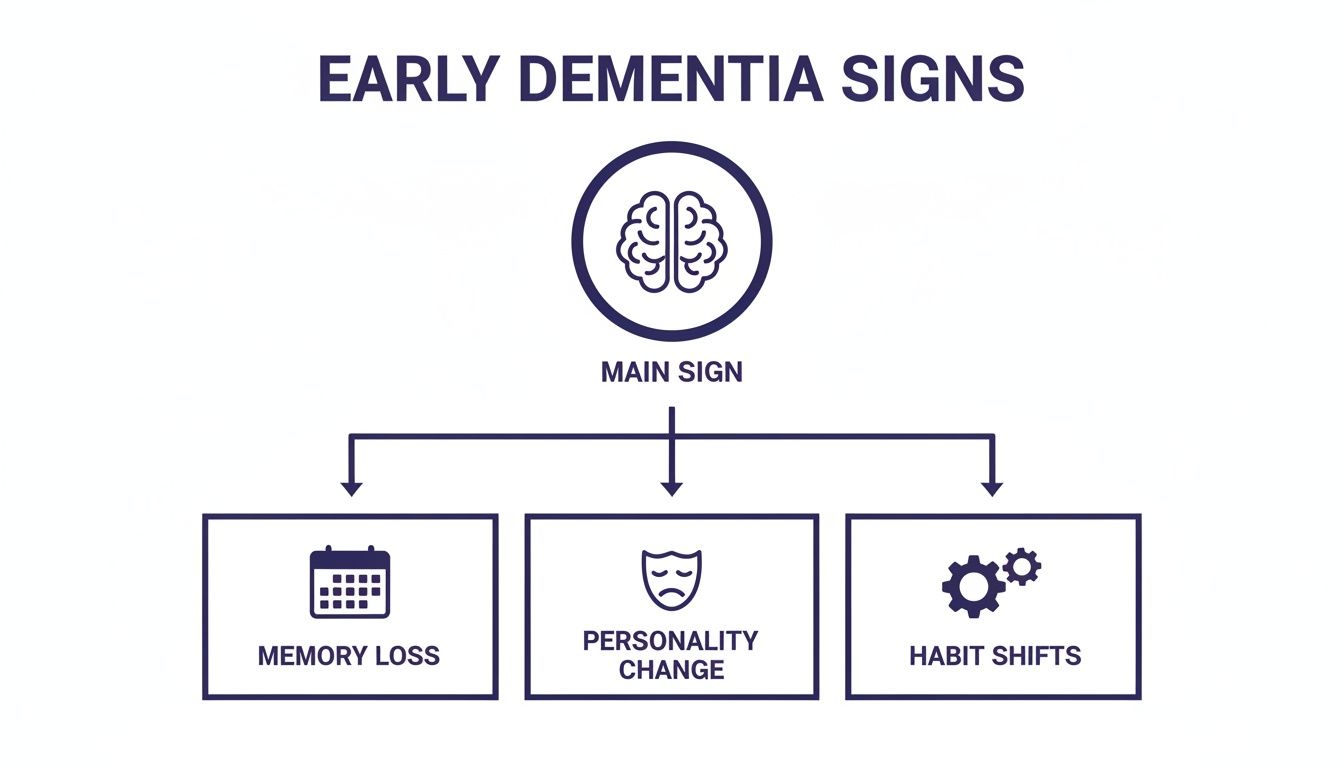
As the diagram shows, memory loss, personality shifts, and changes in habits really are the foundational pillars of early dementia symptoms.
It’s one of the most common worries families have, and for good reason. Recent figures show that while a record 483,000 people aged 65 and over have a formal dementia diagnosis in England, this only represents 65.4% of the estimated total cases.
This gap highlights just how vital it is for families to recognise those early flags, like forgetting recent events or needing constant memory aids. You can read more about the official UK dementia statistics for a deeper understanding of the national picture.
When we move past the occasional misplaced keys or forgotten name, we start to see the more telling signs that might point towards dementia. These aren’t just simple memory lapses. We’re talking about deeper struggles with thinking, reasoning, and processing information – challenges that can make everyday life feel incredibly confusing for a loved one.
Think about a familiar task, like following a recipe they’ve made countless times for family get-togethers. Suddenly, the steps are muddled, the measurements don’t make sense, and the whole sequence feels impossible. This kind of difficulty with planning and following steps is a significant red flag.
It’s a sign that their executive function is struggling. You can think of this as the brain’s “project manager,” the part that organises thoughts and actions. This is why you might also notice a loved one having trouble managing their finances, paying bills on time, or keeping track of appointments—things they once handled with ease.
Challenges Beyond Simple Forgetfulness
These changes in thinking can show up in many ways, and while it’s different for everyone, there are a few common patterns that families often notice first.
- Trouble with problem-solving: An unexpected situation can become overwhelming. If the kettle breaks, for example, they might not be able to think through the logical steps to fix it, like checking the plug or calling for a repair.
- Difficulty with visual and spatial information: This can make even familiar places feel confusing. A trip to the local supermarket, a place they’ve been to hundreds of times, can become disorienting, leaving them feeling lost among the aisles.
- Poor judgement or decision-making: You might see choices that are completely out of character. This could be something like wearing a heavy winter coat on a hot day or making unwise decisions with money. It isn’t a personality change, but a symptom of the brain’s struggle to properly assess a situation.
Perhaps one of the most frightening signs for families is confusion about time or place. A person might lose track of the date, the season, or even the year. They can suddenly forget where they are or how they got there. This is a very serious concern, especially when you consider that dementia is the UK’s biggest killer, responsible for 76,894 deaths in a recent year. While NHS figures show a record 506,549 diagnoses, it’s believed that over a third of the estimated 982,000 UK dementia cases are undiagnosed, which is why awareness is so vital. You can read more about dementia’s impact in the UK and why getting a diagnosis is so important.
The key thing for families to watch for is a pattern of behaviour, not just one-off incidents. Forgetting where you put your keys is normal. But consistently struggling to retrace your steps to find them, or putting them in odd places like the fridge and having no memory of doing so, suggests something more is going on.
Language and Communication Hurdles
Another area where you might notice significant changes is communication. The shifts in the brain caused by dementia often make it hard for a person to use and understand language, which can be incredibly frustrating for everyone involved.
This goes far beyond simply forgetting a word now and then. Someone living with dementia might struggle to keep up with a conversation, often stopping mid-sentence because they’ve lost their train of thought. They might also repeat the same stories or ask the same questions over and over again, not because they’re not listening, but because their brain simply isn’t holding onto the new information.
You might also notice them using the wrong word for something familiar, perhaps calling a watch a “hand-clock.” This isn’t a deliberate mistake. It’s the brain scrambling to find the right “file” for that word. These hurdles in communication really highlight how profoundly dementia can affect a person’s ability to connect with the world and the people they love.
Navigating Behavioural and Psychological Symptoms
While memory loss is the symptom we all hear about, some of the most challenging signs of dementia in elderly people have nothing to do with memory. They are the significant shifts in personality, mood, and behaviour. For families, these changes can be deeply upsetting—often more so than cognitive decline—because it can feel like the person you’ve always known is slipping away.
It’s so important to remember that these aren’t deliberate acts of stubbornness or anger. They are symptoms of the disease, caused directly by the physical changes happening inside the brain. A parent who was once calm and easy-going might suddenly become agitated, suspicious of family, or fearful for no clear reason. Understanding this is the first step toward finding more compassionate and effective ways to respond.
Understanding Common Behavioural Changes
As dementia damages the brain, it can disrupt emotional regulation and impulse control. This can lead to behaviours that are completely out of character and can be incredibly difficult to handle without knowing what’s behind them.
Some of the most common behavioural and psychological symptoms we see include:
- Agitation and Restlessness: This might look like constant pacing, fidgeting, or just a general inability to get comfortable. It often comes from a place of confusion, discomfort, or an unmet need that they can no longer communicate.
- Apathy or Withdrawal: Your loved one might lose all interest in hobbies and social activities they once adored. This isn’t laziness; it’s a symptom that can make the thought of starting any activity feel completely overwhelming.
- Depression and Anxiety: Feelings of deep sadness, hopelessness, and constant worry are very common. For some, the awareness of their own declining abilities is a huge source of emotional distress.
- Suspicion and Paranoia: Because of their memory problems, a person might genuinely believe that others are stealing from them or trying to cause them harm. They might accuse a family member of taking something simply because they can’t remember where they put it.
These behaviours can come and go, with good days and bad days. Learning to spot potential triggers—like a noisy room, a change in routine, or even hidden physical pain—can help you create a calmer, more predictable environment for your loved one.
Seeing these behaviours as symptoms of the illness, rather than a reflection of your loved one’s true feelings, is essential. It allows you to respond with compassion instead of frustration, which de-escalates stressful situations and preserves the dignity of the person with dementia.
Addressing Sleep Disturbances and Sundowning
Dementia frequently throws sleep patterns into disarray. The brain’s internal “biological clock” can become damaged, blurring the lines between night and day. This often leads to someone sleeping for long periods during the day, only to be wide awake and restless at night.
A person with dementia may wake up confused and disoriented in the dark, or get up at 3 a.m. thinking it’s time to head off to work. This is often linked to sundowning, a term for the increase in confusion, agitation, and anxiety that tends to start in the late afternoon and carry on into the evening.
While it is common for people in the later stages to sleep much more, sometimes for 14-15 hours a day, this is often due to the sheer exhaustion the brain is under. Even simple tasks like talking or eating can become incredibly draining. If you notice a sudden increase in sleepiness, however, it’s always wise to check in with a GP to rule out other causes like infections or medication side effects. Responding with patience and creating a peaceful evening routine can make a real difference in managing these difficult symptoms.
Recognising Difficulties with Daily Tasks and Communication
As dementia finds its footing, its effects start to ripple out from memory into the practicalities of daily life. This is often when families notice something is truly wrong. When familiar routines become significant hurdles, it can be one of the most tangible signs of dementia in elderly loved ones.
Suddenly, simple activities they’ve done automatically for years now require immense effort. This isn’t just about having an ‘off day’; it’s a consistent struggle with tasks that were once second nature, leading to frustration and a real knock to their confidence.
Think of it like a seasoned baker who suddenly can’t remember the steps to make their signature cake. They know all the ingredients, but the brain can’t put the recipe together in the right order anymore.
When Daily Routines Become Overwhelming
The changes happening in the brain disrupt the step-by-step thinking needed for even the simplest of tasks. A person might stand in front of their wardrobe, clothes in hand, but be completely unable to work out the sequence of getting dressed. They might pop into the kitchen to make a cup of tea but forget to boil the kettle or put a teabag in the mug.
You’ll often see these challenges surface in a few key areas:
- Personal Care: Things we take for granted, like bathing, brushing teeth, or getting dressed, can become confusing. The sequence of actions gets jumbled, making it hard to maintain personal hygiene.
- Household Chores: Familiar appliances like the microwave or washing machine can suddenly seem like complex machinery. Following a recipe or managing household bills often become impossible.
- Managing Medications: Remembering which pills to take and when becomes a serious challenge, posing significant health risks.
This struggle with once-familiar tasks is a hallmark symptom. The NHS is currently tracking 495,904 patients with dementia, but with diagnosis rates at only 65.4% of estimated cases, countless families are navigating these challenges alone. It’s a sobering thought that when daily routines become unsafe, only 68.2% of those diagnosed have a formal care plan in place. You can read more about the current dementia diagnosis and care planning statistics to get a sense of the national picture.
For instance, specialists in occupational therapy in mental health can provide brilliant strategies to adapt routines, helping people hold on to their independence for as long as possible.
The Breakdown in Communication
Alongside the practical struggles, communication often becomes incredibly difficult. This can be deeply upsetting for everyone involved, creating a barrier at the very time when connection is most needed. It’s important to remember this isn’t a choice; the brain’s language centres are being damaged by the disease.
You may start to notice some classic patterns:
- Word-Finding Difficulties: They might grasp for a word, often substituting it with something odd or simply describing what it does (e.g., calling a watch a “hand-clock”).
- Repeating Questions or Stories: Because the brain isn’t holding onto new information, they might ask the same question over and over, even if you’ve just answered it.
- Losing Their Train of Thought: It’s very common for them to stop mid-sentence, completely forgetting what they were talking about or how to finish their thought.
These issues can make social situations exhausting, and you might find your loved one starts to withdraw from conversations to avoid feeling embarrassed. Adjusting your own communication style can make a world of difference. Try using simpler sentences, being patient, and using non-verbal cues like a gentle touch on the arm.
For those moments when more consistent support is needed, understanding the options for professional live-in care can bring peace of mind, ensuring your loved one is safe and receives compassionate help that adapts to their changing needs.
Taking Action After Recognizing the Signs
Realising a family member is showing the signs of dementia in elderly loved ones can feel overwhelming, to say the least. It’s an emotional and confusing time, but figuring out what to do next can give you back a sense of purpose and control.
This action plan is designed to walk you through those crucial first steps, giving your family a clear path to follow during a challenging time. The journey doesn’t start with a confrontation; it starts with a gentle, caring conversation.
Starting the Conversation
Bringing this up requires a delicate touch. Rather than listing off symptoms or even using the word “dementia,” it’s often better to focus on specific things you’ve noticed.
Try saying something like, “I’ve noticed you’ve been having some trouble with the bills lately, and I’m a bit worried. Why don’t we pop down to the GP for a check-up, just to be on the safe side?”
This approach feels supportive, not accusatory. Your main goal here is to encourage a visit to the GP, which is the single most important next step. The doctor can rule out other treatable conditions that can mimic dementia symptoms, such as infections, vitamin deficiencies, or even side effects from medication.
What to Expect from a Medical Assessment
A proper diagnosis is more than a quick memory test. It’s a comprehensive look at your loved one’s overall health to get the full picture.
A typical assessment will likely include:
- A thorough medical history to review past and present health issues.
- Cognitive tests that look at memory, problem-solving skills, and language.
- Blood tests to screen for any underlying conditions causing the symptoms.
- A brain scan (like a CT or MRI) may also be used to check for any physical changes in the brain.
An early and accurate diagnosis is invaluable. It provides a clear explanation for the changes you’ve been witnessing and unlocks access to treatments, support services, and clinical trials that can help manage symptoms and improve quality of life.
Getting a diagnosis empowers your family to plan for the future. This includes making important legal and financial decisions, like setting up a Power of Attorney. It also opens the door to exploring supportive care, ensuring your loved one gets the compassionate, knowledgeable help they need. For those in Bromley and the surrounding areas, understanding the options for dedicated Alzheimer’s care at home can bring enormous peace of mind.
Once you have a better understanding of the situation, learning the best ways to provide care becomes the next step. You can find practical tips for working with dementia patients online that cover everything from communication to managing difficult behaviours. Taking these proactive steps creates a solid foundation for the road ahead, empowering your family with a clear plan and a strong support network.
Finding Local Dementia Care and Support in Bromley
Recognising the signs of dementia is a huge first step, but figuring out where to find practical, local support is what truly makes a difference for you and your family. If you live in the London Borough of Bromley, the good news is there’s a strong network of services ready to help you navigate this new chapter. You’re not alone, and knowing where to turn is the key to building a support system you can rely on.
The journey usually starts with your local GP. An official diagnosis is the gateway to getting specialist support from the Bromley Memory Service, which offers further assessments, expert advice, and connections to ongoing care. Going through this formal route is vital for accessing any available treatments and creating a recognised care plan.
Connecting with Community Resources
Beyond the NHS, the local community in Bromley offers a lifeline of support that looks after the social and emotional side of things for both people with dementia and their families. These organisations can be brilliant for reducing isolation and providing a helping hand.
- Charitable Organisations: Groups like Age UK Bromley & Greenwich are pillars of the community. They run dementia support services, give advice on benefits, and organise social activities designed to keep people engaged and feeling connected.
- Memory Cafes and Support Groups: These are wonderful, informal gatherings in a safe and welcoming space. They give people with dementia and their carers a chance to socialise, swap stories, and get support from others who really understand what they’re going through.
Weaving these local resources into your routine can create a structure that is both supportive and stimulating, which is incredibly beneficial for someone living with dementia.
Building a local support network isn’t just about finding help for your loved one; it’s also about finding support for yourself. Carer burnout is a very real risk, and connecting with others who understand your journey can provide essential emotional relief and practical advice.
Professional Home Care in Bromley
As dementia progresses, keeping your loved one safe and comfortable at home often becomes the main priority. This is where professional home care can become an indispensable part of your support network. Instead of the upheaval of moving to a new, unfamiliar place, domiciliary care brings personalised support right to their front door.
Specialist dementia care at home is specifically designed to adapt as your loved one’s needs change. Carers aren’t just trained in personal care; they know how to communicate effectively and manage behavioural symptoms with genuine compassion. It’s about ensuring your loved one receives respectful, dignified, and knowledgeable support. For so many families, this is the key to managing the daily challenges while helping their loved one hold onto their independence for as long as possible.
If you’re starting to look at your options, learning more about professional dementia care in Bromley can give you a clear picture of how visiting or live-in carers could help. This kind of dedicated support focuses on creating a safe, consistent, and reassuring environment—the very foundation of well-being for a person with dementia.
Your Dementia Questions Answered
When you first notice worrying changes in a loved one, your mind is likely buzzing with questions. It’s a confusing and uncertain time. Here, we tackle some of the most common concerns families have, offering clear, straightforward answers to help you find your footing.
At What Age Do Dementia Signs Typically Appear?
It’s a common misconception that dementia is just a part of getting old, but that’s simply not true. While it’s most frequently diagnosed in people over the age of 65, it can sometimes appear much earlier.
Some people develop what’s known as early-onset dementia, which can begin to show in their 40s, 50s, or early 60s. For the most common types, like Alzheimer’s, the risk does climb as we age. The bottom line is, if you see persistent changes in memory or behaviour that worry you, it’s always worth a chat with a GP, no matter their age.
Can Dementia Symptoms Suddenly Get Worse?
Yes, and when this happens, it can be incredibly alarming. A sudden, sharp decline in someone’s condition is often a red flag that something else is going on under the surface. It’s not always the dementia itself progressing rapidly.
This kind of sudden dip can be triggered by a few common culprits:
- An infection, like a urinary tract infection (UTI), which can cause severe confusion in older adults.
- Dehydration or not eating properly.
- A bad reaction or side effect from a new medication.
- A major disruption to their routine, like a hospital stay or a house move.
If you see a dramatic change, it’s vital to get a GP involved straight away. Often, treating the underlying issue—like clearing up an infection—can bring about a remarkable improvement in their cognitive symptoms.
Any sudden worsening of symptoms is your cue to seek medical advice. Don’t just assume it’s the dementia taking its course; it could be a treatable health problem that’s making things much harder for your loved one.
Is It Possible to Slow Dementia Progression?
This is the question on every family’s mind. While there isn’t a cure for progressive dementias like Alzheimer’s just yet, there is still so much that can be done to help manage the symptoms and protect a person’s quality of life.
Getting a diagnosis as early as possible is key, as it opens the door to treatments that can help. Certain medications can manage symptoms and, for some, may even slow down the progression for a time. Beyond medicine, lifestyle makes a real difference. Keeping physically active, eating well, staying socially connected, and engaging the mind with puzzles or hobbies all play a powerful role in supporting brain health and overall well-being.
How Do I Talk to a Parent in Denial?
This is one of the most delicate and emotionally charged conversations you can have. Your parent may be scared, confused, or simply unable to recognise the changes in themselves. The best approach is one built on patience and compassion.
Try to avoid using words like ‘dementia’ or ‘Alzheimer’s’ straight away, as they can feel frightening and final. Instead, talk about what you’ve seen in a gentle, non-accusatory way. You could say something like, “Mum, I’ve noticed you’ve been finding it tricky to keep track of appointments lately, and I’m a bit worried. How about we pop to the doctor for a general health MOT, just to rule anything simple out?” Framing it as a routine check-up to look after their overall health often feels much less threatening.
Navigating the complexities of dementia requires compassionate and professional support. Caremark Bromley provides personalised care plans to help your loved one live safely and with dignity in their own home. Learn more about our specialist dementia care in Bromley.