

Reminiscence therapy for meaningful memories
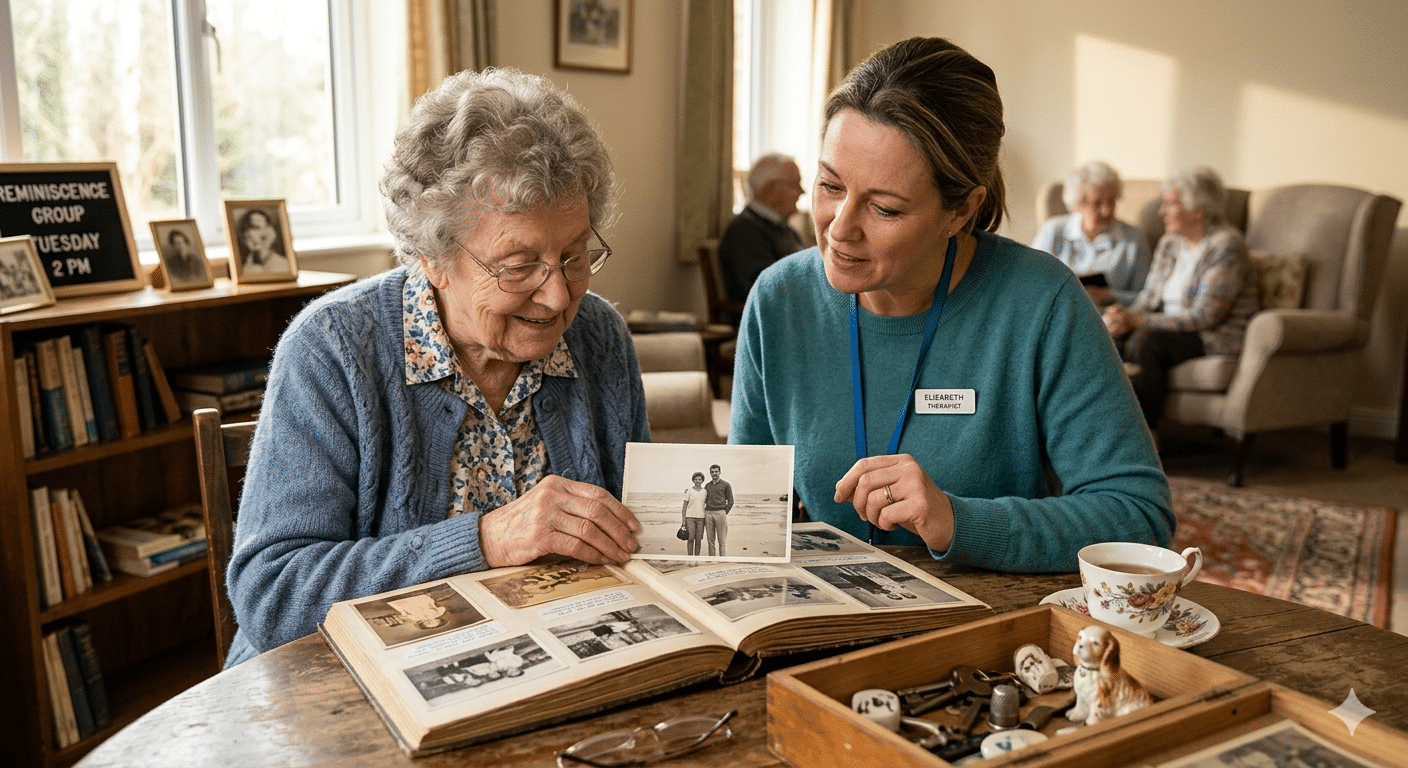
Reminiscence therapy uses familiar memories to spark conversation, lift mood and protect a person’s sense of self. At Caremark Dover, we can thoughtfully build reminiscence activities into everyday home care so people feel settled, confident and connected to who they are.
What is reminiscence therapy?
Reminiscence therapy is a planned, gentle approach that invites someone to recall and share life experiences. For example, prompts such as music, photographs, treasured objects, scents or favourite films are used. Sessions follow a supportive structure led by trained Care Assistants who tailor the pace, topics and prompts to each person’s preferences and comfort. Unlike other interventions, therapy based on reminiscence aims to create beneficial effects in the here-and-now, focusing on recalling positive memories to enhance mood, communication and orientation.
People who may benefit include those living with dementia or mild cognitive impairment, as well as those experiencing low mood, grief or social isolation. Common goals include easing anxiety, encouraging conversation, supporting identity and also strengthening relationships with family and carers. The approach reminiscence therapy offers is supported by evidence showing improved mood and social interaction for people with dementia, with potential gains for cognition and quality of life.
At Caremark Dover, sessions are delivered safely by trained Care Assistants who recognise triggers and signs of distress, use trauma-informed practice and steer away from upsetting topics. Sessions are time‑limited, person‑led and also reviewed regularly to ensure they remain helpful and enjoyable for reminiscence therapy participants.
Benefits for people and families
- Emotional wellbeing: Familiar memories can be powerfully calming. For example, a wedding song or the aroma of a beloved recipe may reduce anxiety and lift mood. Talking about familiar experiences builds confidence and protects a sense of self and achievement. Here, the effect of reminiscence therapy is especially visible.
- Cognitive and social engagement: Reminiscence activities naturally encourage attention, conversation and orientation. Sharing stories with a trusted Care Assistant or family member can prompt naming, sequencing and recall. In a group setting, therapy focused on reminiscence supports new conversation pathways and adds shared enjoyment, even if forming recent memories is challenging.
- Quality of life at home: Our person‑centred approach weaves reminiscence activities into daily routines. For example, a morning cuppa might be paired with a favourite radio station; a relaxed afternoon can include photo albums; cherished recipes can inspire gentle baking. Small, regular touchpoints help maintain comfort, continuity and joy at home.
Families often notice more shared laughter, easier chats and practical ideas for visits. By focusing on strengths and cherished experiences, the value of reminiscence therapy is revealed as it then shifts care from tasks alone to meaningful connection.
How Caremark delivers reminiscence therapy at home
Personalised planning: We start with a careful assessment and a friendly conversation about life history, hobbies, work, family and important places. Care Assistants curate prompts such as playlists from key decades, labelled photo selections, favourite textures and scents, or keepsakes like medals and postcards. Sessions are adapted for sensory preferences and cultural background and can be one‑to‑one or part of group reminiscence therapy with family present.
Training, safeguarding and continuity: Our local teams receive training in dementia care, communication, cueing and risk awareness. Safeguarding is central to our practice, with clear protocols that then protect dignity, confidentiality and choice. We prioritise continuity so the same friendly faces lead sessions, building trust and noticing signs of tiredness, distress or enthusiasm. This is how we deliver meaningful reminiscence therapy benefits safely and consistently.
Getting started: After your enquiry, we arrange a home assessment to understand goals and gather consent for any materials used. We then offer flexible visit options, from short companion visits to longer themed sessions, and we can integrate therapy focusing on reminiscence into existing care plans. Progress is reviewed regularly with you and your family to refine prompts, set new goals and celebrate successes. If needs change, we adapt while keeping the person’s preferences at the heart of reminiscence care.
Simple ideas to try at home
| Prompt | How it helps | Tips |
|---|---|---|
| Decade playlists | Music can unlock memories and lift mood | Start with ages 15–30 and keep volume comfortable |
| Photo selections | Encourages naming and storytelling | Label photos and introduce a few at a time |
| Familiar scents | Scents cue emotions and recognition | Use gentle aromas linked to happy times |
| Favourite films or radio | Shared enjoyment and conversation starters | Choose shorter clips to avoid fatigue |
Speak to Caremark
Caremark Dover is a trusted leader in home care across the UK. Our local teams are human, kind and safe, with professional standards you can rely on. If you would like to explore therapy using reminiscence, either for yourself or a loved one, contact your local Caremark team. We will offer clear guidance, a personalised plan as well as compassionate continuity of care. Together, we can create simple, enjoyable moments that make each day feel more familiar, purposeful and connected at home.